
Health
UNICEF Rallies Communities to Unite in Polio Eradication


BY Muhammad Jamil Abubakar
As Nigeria pushes to eradicate polio by the end of 2025, UNICEF has raised serious concerns over the high number of unimmunised children in Gombe State, urging immediate and coordinated action ahead of the April 2025 polio immunization campaign.
Dr. Nuzhat Rafique, Chief of Field Office, UNICEF Bauchi, emphasized the critical role of all stakeholders from households to the state government in ensuring that every child is vaccinated.
“This is a very important message for everyone. We need to make sure that each and every child receives the polio vaccine during the campaign,” she stated.
Gombe State currently accounts for over 53,000 “zero-dose” children — those who have never received any dose of the polio vaccine. Of this number, more than 28,000 reside in just five local government areas: Akko, Funakaye, Yamaltu/Deba, Dukku, and Kwami. Additionally, five LGAs — Dukku, Yamaltu/Deba, Akko, Nafada, and Kaltungo — have been identified as high-risk areas requiring intensified support and intervention.
Dr. Rafique stressed that the persistence of non-compliant families in these communities is a major obstacle.
“These families are putting all Nigerian children at risk. It is not acceptable. We must change the narrative to make Nigeria polio-free,” she said, adding that the success of the campaign depends on grassroots efforts involving community leaders, religious figures, local council officials, and state authorities.
She called for immediate household and community-level counseling to address vaccine hesitancy and increase acceptance.
“UNICEF needs everyone to be warriors in this fight against polio. 2025 is our final year to eradicate polio in NIGERIA, every child must be reached.”
With the April campaign drawing near, the spotlight remains firmly on Gombe State as a critical frontline in Nigeria’s polio eradication efforts.
About The Author






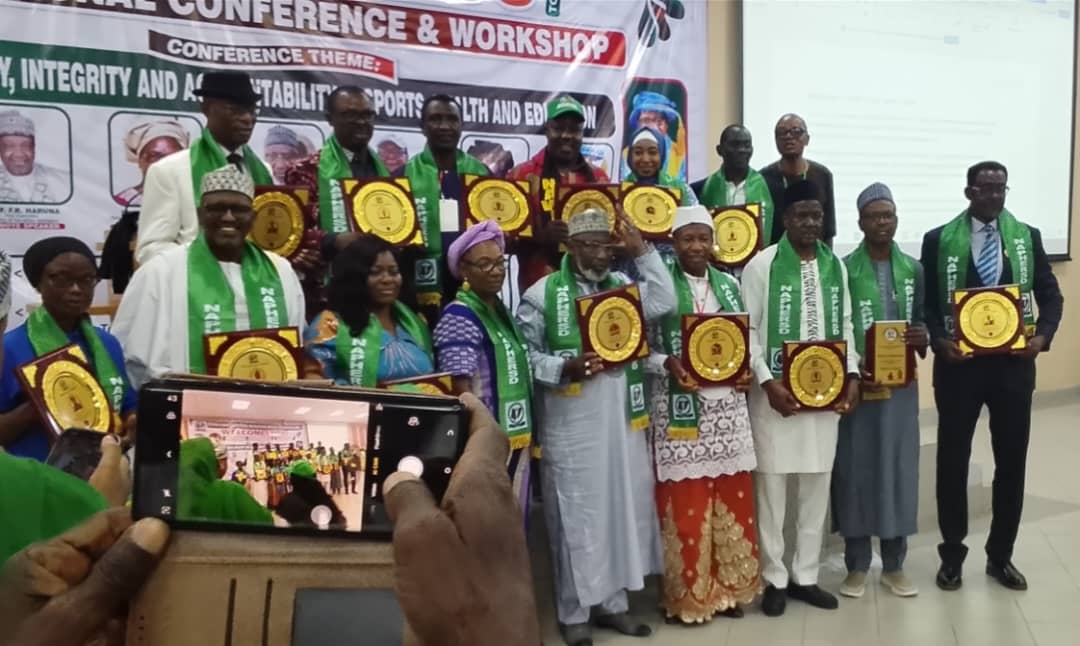
NAPHER-SD elects new executive members
Applauds BUK VC for support
By Ado Salisu
Nigerian Association for Physical, Health Education, Recreational, Sports and Dance NAPHER-SD has re-elected Professor Florence Bola Adeyanju for second term as it President.
The election was conducted during the association 54th annual conference and elective posts held at the Centre of Excellent, Bayero University Kano BUK.
Others re-elected include the immediate past Secretary General of Nigerian Football Federation NFF, Dr Sanusi Muhammad as first Vice President, Mr. Godspower Odedede, the second Vice President and Mr Igba Emmanuel will serve as Secretary.
The rest are Dr. Sylvester Ikuojemoye, Assistant Secretary, Dr. Joy Maiyaki, financial secretary, Professor Fraze Atare, treasurer, Dr. Ajibola Gbenga Samson, public relations officer, Dr. Musa H. Darma, Publication Secretary,
Dr Chijoke Okechukwu, auditor while Ex-officio 1 went to the chairman technical committee of Nigerian University Games Association NUGA and former chairman sports committee of Bayero University Kano BUK Professor Musa Garba Yakasai.
The conference and workshop witnessed a large turn out of members and some Vice Chancellors of Universities, researchers and observers across the country was declared open by the Vice Chancellor of Bayero University Kano BUK, Professor Haruna Musa, represented by Dr Abubakar Ibrahim Hassan.
Theme for this year’s is transparency, integrity and accountability in sports, health and education. Various papers were presented at the occasion.
Speaking shortly after the election, the re+elected president, professor Florence Bola Adeyanju expressed gratitude to the all members, pledging to continue to do her best towards the uplifting of the association in the country.
Commenting, the Ex-officio 1 and the chairman technical committee of Nigerian University Games Association NUGA, Professor Musa Garba Yakasai described the turn out of members as highly appreciated.
Professor Musa Garba Yakasai used the opportunity to thanks the BUK VC Prof Haruna Musa for supporting the association throughout the five-days conference.
About The Author
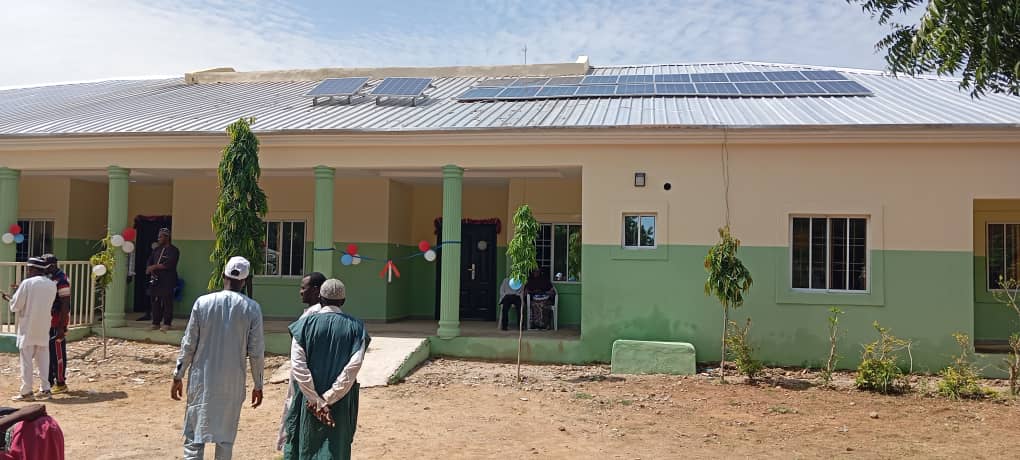
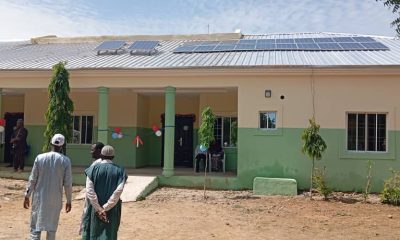
The Katsina State Government has received three upgraded Primary Health Care Centres (PHCs) from the United Nations Children’s Fund (UNICEF).
The facilities are the MCHC Bakiyawa in Batagarawa Local Government Area (LGA), Sabon Gari PHC in Daura LGA and Dandutse PHC in Funtua LGA.
Speaking at the handover on Thursday in Bakiyawa village, the UNICEF Health Manager, Kano Field Office, Dr Serekeberehan Seyoum, said the projects were implemented with support from the Global Fund.
Seyoum said UNICEF served as the implementing partner for the renovation and upgrading of the three facilities to improve access to quality primary health care services.
He said the successful completion of the projects would improve working conditions for health workers and enhance health outcomes, particularly for women, children and other vulnerable groups.
“The facilities are now ready to provide quality health services to their respective communities,” he said.
The UNICEF official said the formal handover transferred responsibility for the management, utilisation and maintenance of the facilities to the Katsina State Primary Health Care Development Agency.
He urged the state government and relevant authorities to ensure adequate staffing, provision of essential medical supplies and routine maintenance of the facilities.
Seyoum also called for the prompt commencement and sustenance of quality service delivery to enable communities to derive maximum benefits from the investment.
He commended the Katsina State Government, the State Primary Health Care Development Agency, local government authorities, community stakeholders and the Global Fund for their support and collaboration.
According to him, UNICEF remains committed to supporting the Katsina government in strengthening its health system and improving the well-being of residents.
“We are proud to hand over these upgraded facilities and look forward to seeing them serve as centres of quality health care for communities across Katsina State,” he said.
Earlier, the Executive Secretary of the Katsina State Primary Health Care Development Agency, Dr Shaumau Abba, commended UNICEF and the Global Fund for the intervention.
Abba assured that the agency, in collaboration with the respective local government councils, would provide the necessary equipment and personnel to ensure effective service delivery at the facilities.
She pledged that the agency would ensure that residents of the benefiting communities fully utilise and benefit from the upgraded health centres.
Also speaking, the Chairman of Batagarawa Local Government Council, Alhaji Yahaya Lawal-Kawo, represented by his Vice-Chairman, Abdulrahman Ahmad, pledged the council’s commitment to the protection and maintenance of the facility.
He assured that the council would work with relevant stakeholders to ensure that the people of the community benefited fully from the upgraded health centre.
The News Agency of Nigeria (NAN) reports that the intervention is expected to strengthen the delivery of essential health services at the grassroots and improve access to quality care in the benefiting communities.
About The Author
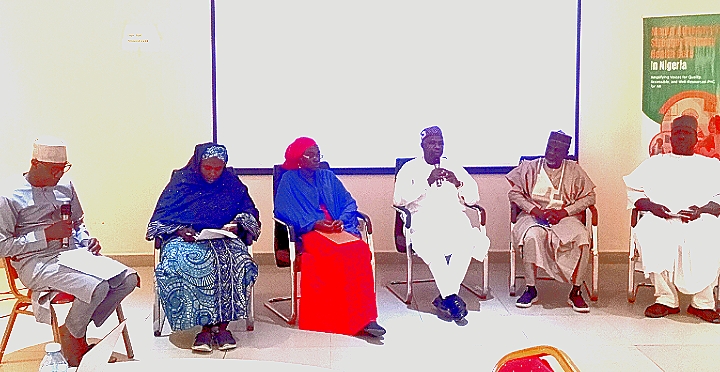
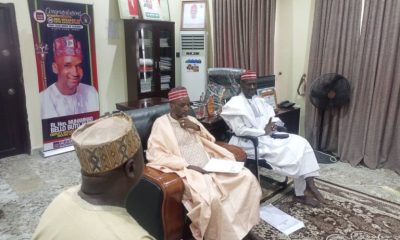
The Kano State Ministry of Health, in collaboration with the International Society of Media in Public Health (ISMPH), Engender Health Consortium Partnership and Unified Health Media Network, has organised a one-day roundtable dialogue with health stakeholders and media practitioners.
The engagement aimed at strengthening journalists’ capacity to use Integrated Supportive Supervision (ISS) data, Reproductive, Maternal, Newborn, Child and Adolescent Health (RMNCAH) indicators and Primary Health Care Facility Assessment Tool (PHC-FAT) Scorecards for evidence-based health reporting.
The Commissioner for Health, Dr Abubakar Labaran Yusuf, reaffirmed the ministry’s commitment to strengthening collaboration with the media, describing responsible and data-driven journalism as essential for promoting transparency, influencing policies and improving healthcare delivery.
The Director-General of the Kano State Primary Health Care Management Board, Prof. Salisu Ahmad Ibrahim, said health data must be translated into impactful stories that would encourage positive action and boost public confidence in the health system.
Ibrahim called for sustained collaboration between media organisations and health institutions to ensure accurate dissemination of information that would support improved primary healthcare services.
The dialogue featured an interactive session where participants discussed ways of strengthening media-health collaboration, promoting evidence-based reporting and improving accountability in RMNCAH and primary healthcare outcomes across Kano State.
Speaking also, the Executive Director of ISMPH, Mrs Moji Makanjuola, said the meeting was aimed at strengthening the capacity of journalists and health sector stakeholders to generate accurate, data-driven stories using health information from Integrated Supportive Supervision (ISS), Reproductive, Maternal, Newborn, Child and Adolescent Health (RMNCAH) indicators, and Primary Health Care Facility Assessment Tool (PHC-FAT) scorecards.
Makonjola, represented by Project Director, Solomon Dogo,said the media remained a strategic partner in strengthening health systems, promoting accountability and shaping public understanding of critical health issues.
“In today’s information age, the media is far more than a channel for disseminating news. It is a powerful force for shaping public perception, influencing policy conversations, encouraging healthy behaviours and promoting accountability,” she said.
The executive director noted that health institutions generated valuable data which, when properly interpreted and communicated, could support informed public dialogue and better decision-making.
She, however, observed that technical health information was often underutilised because it was not always translated into messages that connected with the public.
About The Author

FEPSGA Games: Kano Sports Commission boss to inspect facilities

NAPHER-SD elects new executive members

Kano secures sports festival tickets at North West zonal qualifiers

JUST IN: FG Declares Sallah Public Holiday

Rahma Saidu Apologizes to Kano Government, Lauds PCACC’s Work

Refinery: NNPC Ltd Targets Sustained Production with New Maintenance & Compliance Measures
-
General2 years ago
JUST IN: FG Declares Sallah Public Holiday
-
 General1 year ago
Rahma Saidu Apologizes to Kano Government, Lauds PCACC’s Work
-
 Economy2 years ago
Refinery: NNPC Ltd Targets Sustained Production with New Maintenance & Compliance Measures
-

 Agriculture1 year ago
New HJRBDA boss outlines ambitious agenda for agricultural growth, youth empowerment
-

 News2 years ago
Choose dialogue over protest, Kano groups urge youths
-

 Agriculture2 years ago
FG trains laboratory technicians , technologists on soil health card scheme
-

 General2 years ago
ActionAid urges youths to harness digital technologies for development
-
 Entertainment3 years ago
Popular actor, Ali Nuhu appointed as MD Film Corporation