
Security
Zamfara: I can end banditry in two months if allowed — Gov. Lawal


About The Author


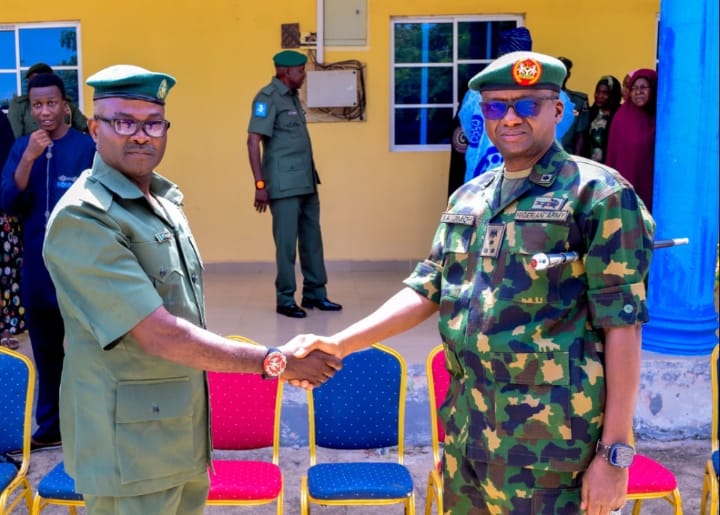
The Commander, 3 Brigade, Nigerian Army, Brig.-Gen. Saka Jimoh, has honoured 22 senior non-commissioned officers (SNCOs) for 35 years of meritorious service to the Army and the country.
Jimoh honoured the retiring personnel at a send-off ceremony held at the Brigade Auditorium on Thursday, where they received cash gifts and other items in recognition of their service and sacrifices.
This is contained in a statement issued by the Assistant Director, Army Public Relations, 3 Brigade, Nigerian Army, Maj. Babatunde Zubairu on Friday in Kano.
The commander commended the retirees for their loyalty, discipline and commitment to duty throughout their military careers.
He said their contributions had supported the operational effectiveness of the Nigerian Army and the successful execution of its mandate.
Jimoh noted that military service required significant sacrifices, including prolonged separation from families and working under challenging conditions to protect the country.
He urged the retirees to remain good ambassadors of the Nigerian Army, uphold the values of discipline and integrity, and use their wealth of experience to mentor younger personnel.
The commander also encouraged them to contribute to the development of their communities and approach retirement with optimism.
He advised the retirees to plan for their future, manage their resources wisely, acquire additional skills where necessary, and prioritise their health and well-being.
Earlier, the outgoing Brigade Regimental Sergeant Major, Master Warrant Officer Suleiman Mohammed, who spoke on behalf of the retirees, expressed appreciation to Jimoh for the recognition and support.
Mohammed commended the commander for his generosity and commitment to personnel welfare, saying the gesture demonstrated appreciation for soldiers who had devoted much of their lives to national service.
The ceremony ended with a luncheon attended by the commander, senior officers and other personnel to celebrate the retirees’ years of service to the Nigerian Army.
MNT
About The Author
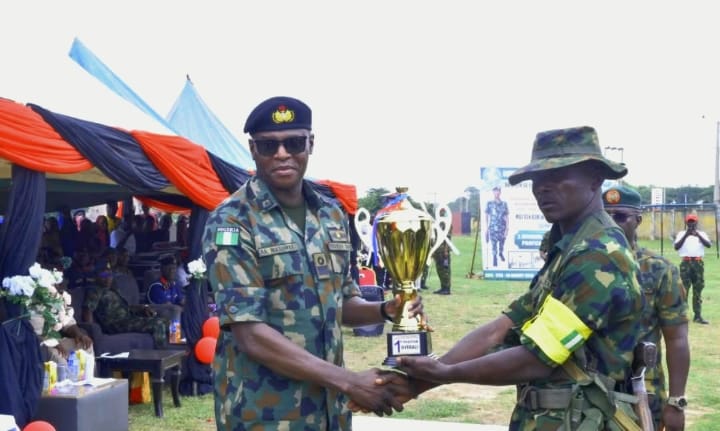
3 Brigade Nigerian Army, Kano, has emerged overall winner of the 2026 One Division Inter-Brigade Combat Proficiency Competition held in Kano.
The brigade secured the first position with 565.5 points, while 31 Artillery Brigade, Minna, Niger State, came second with 539 points. 1 Division Garrison, Kaduna, placed third with 534 points.
The three-day competition featured various military exercises aimed at testing the combat readiness, tactical awareness, physical fitness, leadership skills and professional competence of participating junior and middle-level officers.
The events included weapon handling, combat training, map reading, shooting and obstacle crossing, providing participants with opportunities to sharpen their skills and improve their preparedness for contemporary security operations.
Speaking at the closing ceremony, the Commander, 3 Brigade Nigerian Army, Kano, Brig.-Gen. Saka Jimoh, said the exercise was part of the numerous training programmes organised by Army Headquarters to ensure troops remained adequately prepared to tackle evolving security challenges.
Jimoh said continuous training and improved welfare of personnel remained key components of the Nigerian Army’s efforts to enhance operational effectiveness.
He added that the competition demonstrated the commitment of the Army to developing officers with the required skills, discipline and leadership qualities needed for effective command responsibilities.
“Welfare is one of the pillars of our command philosophy, and one very important aspect of it is the soldiers’ health concept. That is what we, as commanders in the Nigerian Army, are after to ensure the welfare of both our officers and men,” he said.
On security challenges within the brigade’s area of responsibility, including Kano and neighbouring states, Jimoh said criminal elements were feeling the impact of sustained Army operations.
He attributed the progress recorded to the training of troops and effective use of credible intelligence, assuring that the Army would continue to work towards eliminating criminal elements within its area of responsibility.
Earlier, the Special guest of honor, the Commandant, Nigeria Navy Logistics College, Dawakin Tofa, Kano, Commodore Abubakar Madawaki, commended participants for demonstrating courage, discipline, leadership, tactical awareness, physical fitness and commitment to duty throughout the competition.
Madawaki said continuous training remained critical to preparing officers for the complex demands of modern military operations, adding that the competition provided an avenue for junior and middle-level officers to improve their combat skills and decision-making abilities.
He congratulated the winners and encouraged other participants to regard the experience gained as an opportunity for professional growth.
About The Author
The Nigerian Army has commenced the 2026 1 Division Inter-Brigade Combat Proficiency Competition in Kano to assess and enhance the operational readiness, physical fitness and combat capabilities of its officers.
Declaring the competition open, the General Officer Commanding (GOC), 1 Division Nigerian Army, Maj.-Gen. Abubakar Mohammed-Wase, said the annual exercise was designed to sharpen troops’ skills and improve their capacity to respond to emerging security challenges.
Represented by Chief of Staff, 1 Division, Brig.-Gen. Timothy Opurum, said the competition was in line with the Chief of Army Staff’s Command Philosophy of transforming the Nigerian Army into a more professional, adaptable, combat-ready and resilient force capable of discharging its constitutional responsibilities within a joint and multi-agency environment.
The GOC added that the exercise would provide an opportunity for officers from participating formations to demonstrate their proficiency in physical fitness, leadership, tactical competence, mental alertness and ability to operate effectively under pressure.
According to him, the competition involves three formations under the division, including 1 Division Garrison, 3 Brigade and 31 Artillery Brigade, competing in four events.
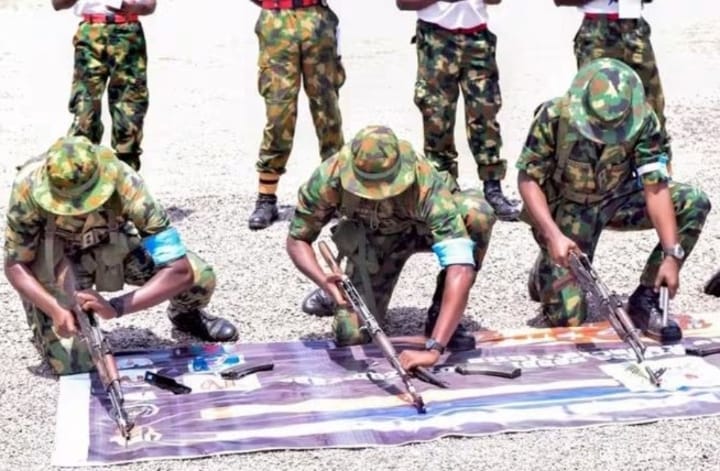
The events are weapon handling and combat shooting, map reading, endurance run and obstacle crossing, as well as combat swimming.
“The competition is aimed at improving leadership skills, organisational ability and initiative, while promoting esprit de corps among troops in preparation for enhanced performance in battle,” he said.
The GOC noted that the nation’s current security environment required commanders who were not only professionally competent but also physically and mentally prepared to confront complex operational challenges.
He described the competition as a vital platform for improving the resilience and combat proficiency required by officers in carrying out their constitutional responsibilities.
Mohammed -Wase urged participating formations to uphold the values of loyalty, discipline and integrity, adding that the objective of the exercise was beyond winning but to improve individual and collective operational capabilities.
“To the participating officers, I encourage you to see this competition as an opportunity to test yourselves, learn from one another and identify areas requiring further improvement,” he said.
He commended troops operating in various theatres for their efforts in ensuring peace and stability in the country, attributing improvements in operational capacity to effective leadership, sound planning and logistics support.
The GOC also appreciated the Chief of Army Staff, Lt.-Gen. Waidi Shaibu, for providing resources and support for the competition, as well as the Commander, 3 Brigade, for providing facilities and logistics assistance.
He urged umpires and officials to ensure fairness, impartiality and professionalism throughout the competition.
Earlier, Commander, 3 Brigade, Nigerian Army, Brig.-Gen. Saka Jimoh, said the competition was designed to test the competence, confidence and ability of officers to perform effectively under challenging operational conditions.
According to him, the exercise would also strengthen leadership, teamwork, discipline and professionalism among participating personnel.
“The Inter-Brigade Combat Proficiency Competition is a significant professional activity designed to assess, strengthen and sustain the physical fitness, mental alertness, combat skills and operational effectiveness of participating officers.
“It provides an opportunity for officers to demonstrate their competence, confidence and ability to perform optimally under demanding and challenging conditions,” he said.
He said the activities were carefully selected to test individual competence and the ability of officers to operate effectively under pressure.
Jimoh appreciated the GOC for providing strategic guidance and support towards the successful hosting of the event.
He said the support demonstrated the commitment of the command to sustaining professional competence and operational readiness across the division.
“I sincerely appreciate the resources and other necessary support made available for this event. This gesture has significantly enhanced the Brigade’s ability to organise and host the competition,” he said.
He expressed optimism that the exercise would further enhance collective combat proficiency, teamwork and operational effectiveness among officers of the division.
3 Brigade, Nigerian Army, won the Stripping and Assembling Competition, while 31 Artillery Brigade, Minna, Nigerian Army, emerged second and 1 Division Garrison, Kaduna, came third.
The competition involving officers from the rank of 2nd Lieutenant to Major, will end in Aug. 20.
About The Author

ABCOAD, UNESCO Partner to Boost Technical Skills in Rice Processing

2027: Gov Yusuf assures Tinubu of North support for his re-election

Nigerian Army honours 22 SNCOs after 35 years of meritorious service

JUST IN: FG Declares Sallah Public Holiday

Rahma Saidu Apologizes to Kano Government, Lauds PCACC’s Work

Refinery: NNPC Ltd Targets Sustained Production with New Maintenance & Compliance Measures
-
General3 years ago
JUST IN: FG Declares Sallah Public Holiday
-
 General2 years ago
Rahma Saidu Apologizes to Kano Government, Lauds PCACC’s Work
-
 Economy2 years ago
Refinery: NNPC Ltd Targets Sustained Production with New Maintenance & Compliance Measures
-

 Agriculture2 years ago
New HJRBDA boss outlines ambitious agenda for agricultural growth, youth empowerment
-

 News2 years ago
Choose dialogue over protest, Kano groups urge youths
-

 Agriculture2 years ago
FG trains laboratory technicians , technologists on soil health card scheme
-

 General2 years ago
ActionAid urges youths to harness digital technologies for development
-
 Entertainment3 years ago
Popular actor, Ali Nuhu appointed as MD Film Corporation