
Economy
NEPC, KACCIMA trains SMEs, MSMEs in Kano to boost export readiness

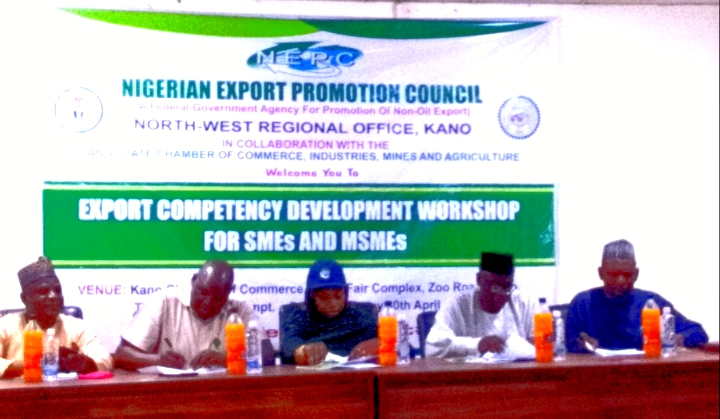
The Nigeria Export Promotion Council (NEPC) says it is committed to building the capacity of Small and Medium Enterprises (SMEs) and Micro, Small and Medium Enterprises (MSMEs) to make them export-ready.
Hajiya Amina Abdulmalik, North West Regional Coordinator NEPC, stated this on Thursday in Kano at the Export Competency Development Workshop for SMEs and MSMEs.
She said the workshop was designed to prepare exporters with the knowledge and skills required to take their produce beyond the shores of Nigeria.
“The essence of organizing this workshop is to prepare our exporters, build their capacity, and make them ready to export. By the end of this workshop, I want to see more than half of the participants export-ready,” Abdulmalik said.
She explained that once exporters are able to formally export their products, Nigeria’s trade volume would increase, thereby contributing positively to the nation’s Gross Domestic Product (GDP).
According to her, support for exporters depends on the type of product being exported, stressing that working in clusters makes retention and assistance easier.
“A common center, perhaps with machinery, can help them process their products. It is not feasible to provide individual support, except through the Export Expansion Grant (EEG),” she said.
She added that exporters must formally export their products, repatriate proceeds, and maintain proper accounts to benefit from the EEG, which serves as a financial incentive.
Abdulmalik noted that NEPC had also provided certificates such as the Mandatory Development Certificate (MDE) and the Hazard Analysis and Critical Control Point (HACCP) certificate to participants, especially women.
“These certificates are essential for exporting to Europe and the United States. Without them, individuals would face significant costs, but through our support, many have been able to obtain them,” she said.
Earlier, Alhaji Nura Habib, Vice President of KACCIMA, said this at the Export Competency Development Workshop in Kano, describing the programme as an opportunity to reposition enterprises and compete beyond Nigeria’s borders.
He noted that access to markets begins with access to knowledge, stressing that the workshop would provide insights into procedures, standards, documentation and international expectations.
Habib commended the Nigerian Export Promotion Council (NEPC) for its dedication to promoting non-oil exports and pledged KACCIMA’s support in expanding Nigeria’s export base.
Speaking also, the Director-General of KACCIMA, Alhaji Tijani Abdullahi, said the workshop was designed to enlighten entrepreneurs on formal export processes and regulations.
“We organized this workshop to guide them on the procedures and rules required for effective export business,” he said, adding that many agribusiness operators in Kano were now conducting exports properly.
Sarki explained that KACCIMA provides information on goods required for export, registration processes and compliance with rules and regulations, noting that the initiative had already yielded positive results.
About The Author




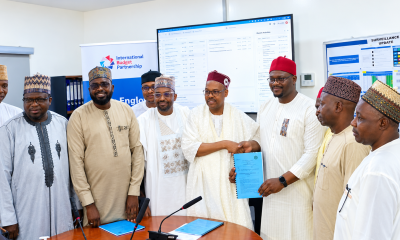

Kano govt, UNICEF strengthen budget tracking for child-focused programmes
The Kano State Government, in collaboration with the United Nations Children’s Fund (UNICEF), is strengthening budget tracking and accountability for nutrition, social protection and child protection programmes through a budget-tagging initiative.
The Commissioner for Budget and Planning, Alhaji Musa Shanono, disclosed this during a session on budget tagging for nutrition, social protection and child protection programmes on Sunday in Dutse, Jigawa State.
Shanono, represented by the Director of Planning in the ministry, Alhaji Ismail Kabir, said the initiative was designed to strengthen the capacity of Ministries, Departments and Agencies (MDAs) to identify and track budgetary allocations for the programmes.
He said the exercise would also help identify and consolidate relevant budget lines across MDAs responsible for implementing nutrition, social protection and child protection interventions.
According to him, the state is currently consolidating its 2027 budget, including allocations for the programmes, although the exact figures are yet to be determined.
Shanono said the budget-tagging system would enable stakeholders to access information on approved allocations, implementation activities and expenditure performance.
He explained that the system would make it easier to track allocations and assess the implementation of programmes under nutrition, social protection and child protection, either separately or collectively.
“The specific performance of allocations for nutrition, social protection and child protection has yet to be determined,” he said.
The commissioner noted that Kano could not address the challenges in the three sectors alone due to limited resources.
He, therefore, called on development partners, including the United Nations Children’s Fund (UNICEF), to support the state’s efforts.
The director also urged partners to coordinate their interventions with the ministry and clearly identify their areas of specialisation to avoid duplication of efforts.
According to him, the ministry is strengthening coordination among relevant MDAs and development partners to ensure effective implementation of the programmes.
He added that the ministry regularly engages relevant agencies to assess progress and is preparing for a third-quarter review meeting on nutrition and social protection programmes in the state.
Earlier, UNICEF Social Policy Specialist, Fatimah Musa, said the organisation was supporting the state government’s budget coding and tagging initiative for nutrition, social protection and child protection programmes.
She described the initiative as an important step toward improving the visibility and tracking of public resources allocated to the critical sectors.
Musa said budget tagging would enable the government to understand the level of allocation to the sectors, monitor expenditure, identify funding gaps and strengthen accountability for results.
According to her, the initiative will support evidence-based budgeting and help ensure that public resources are directed toward improving the nutrition, protection and overall well-being of children and vulnerable households.
She reiterated UNICEF’s commitment to continued collaboration with the Kano State Government to achieve tangible results for children and vulnerable groups.
Also speaking, the Director-General of the Kano State Social Protection Agency (KASPA), Fatima Abubakar, reaffirmed the state’s commitment to strengthening social protection programmes to improve the living conditions of vulnerable persons.
Abubakar said the commitment was aimed at reducing poverty and inequality, protecting vulnerable households and ensuring access to essential support services for disadvantaged groups.
She stressed that effective implementation of social protection programmes required adequate funding, appropriate budgetary allocations and collaboration among relevant MDAs and development partners.
The director-general urged stakeholders to support government efforts to strengthen social protection systems and ensure that interventions reached intended beneficiaries across the state.
Social protection expert, Mr Salisu Yusuf, says the Kano State Ministry of Budget and Planning, with support from UNICEF, facilitated the creation of budget lines for social protection programmes targeting poor and vulnerable groups.
He said the initiative involved relevant ministries, departments and agencies (MDAs) to mobilise resources for existing and proposed programmes.
Yusuf added that the state had also developed a Social Protection Policy and drafted a bill for establishing a Social Protection Agency, with support from ActionAid and other stakeholders.
He said the programmes aimed to reduce poverty and inequality, improve living conditions, protect vulnerable groups and promote inclusive and sustainable development.
About The Author

The Executive Chairman, Kano State Internal Revenue Service (KIRS), Alhaji Bashir Maitama has urged taxpayers to pay their taxes correctly and as when due.
Maitama made the call while speaking in Kano on Wednesday during the Customer Service Week of the service.
He said the celebration provided an opportunity for the agency to appreciate taxpayers for their contributions to the development of the state.
The chairman described taxpayers as important stakeholders whose contributions were valued by the agency and the state government.
Maitama said KIRS’ digital tax platforms had made tax payment easier, adding that the agency was committed to resolving challenges experienced by taxpayers.
He urged taxpayers facing difficulties with the platforms to contact the agency for prompt assistance.
On revenue performance, the chairman said KIRS had recorded significant improvement in its collections and expressed confidence that it would meet the revenue target set by the state government.
He said the agency would continue to promote voluntary compliance and expand the tax net by bringing more eligible taxpayers into the system.
“There are many people doing businesses who are not yet in the tax net. We want to ensure that more taxpayers are captured and encouraged to comply voluntarily,” he said.
The chairman explained that the digitization of KIRS operations was aimed at blocking revenue leakages, improving transparency and simplifying tax payment.
He said the agency would continue to adopt technology to improve efficiency, revenue collection and service delivery.
Maitama, therefore, urged taxpayers to fulfil their tax obligations promptly and correctly.
Earlier, The Executive Director, Revenue Operations, (KIRS), Kasim Ismael urged taxpayers to pay their taxes correctly and as when due, describing tax payment as essential to the development of the state.
He said taxes were an important source of revenue for the government to provide essential services, maintain institutions and promote peace and development.
The executive director also called for improved cooperation between the agency and taxpayers to strengthen compliance and revenue generation in the state.
Speaking also, Mr Michael Daniel, who spoke on behalf of the customers, said that taxpayers appreciated the efforts of KIRS in improving its services and strengthening its relationship with taxpayers.
He urged the agency to sustain its commitment to transparency, professionalism and efficient service delivery, saying improved customer service would encourage more people to comply with their tax obligations.
NAN
About The Author

The Nestlé Milo Mai Shayi empowerment programme has continued to receive commendation from stakeholders in Kano, with beneficiaries describing the initiative as a major boost to their small-scale businesses.
The programme, aimed at supporting tea sellers with business tools and resources, provided participants with items including gas cookers, cups and other materials to enhance their daily operations.
Speaking during the programme in Kano, Kannywood actor, Yusuf Sulaiman Bosho, said the initiative would contribute to the growth of tea-selling businesses and improve the livelihoods of operators.
Bosho noted that many small businesses require support to expand, adding that providing essential working tools would encourage beneficiaries to increase productivity.
“Supporting them with tools such as gas cookers, cups and ingredients is really a motivation in their day-to-day businesses,” he said.
He urged other corporate organisations to emulate Nestlé Milo by introducing similar interventions that would support small businesses across the country.
Also speaking, Milo Ambassador, Mansura Isa, said the programme demonstrated the company’s commitment to supporting its customers, particularly those engaged in small-scale enterprises.
Isa encouraged the beneficiaries to make effective use of the materials provided to improve their businesses and create more opportunities within their communities.
She added that more initiatives were being planned by the company to support customers across Nigeria and other parts of Africa.
The Category Manager of Nestlé Milo, Mr Gilbert Teenaboah Koduah, said the company would continue to invest in programmes that promote socio-economic development among its customers.
Koduah explained that the intervention was part of efforts by the company to strengthen businesses and contribute to economic growth at the community level.
Some of the beneficiaries who spoke to our Correspondent expressed appreciation to Nestlé Milo for the support, saying the items would help them improve their services and increase their earnings.
They pledged to continue patronising the company’s products while maximising the opportunity provided through the empowerment programme.
The event featured the presentation of tea-selling equipment and other gifts to participants.
About The Author

Kano govt, UNICEF strengthen budget tracking for child-focused programmes

ABCOAD, UNESCO Partner to Boost Technical Skills in Rice Processing

2027: Gov Yusuf assures Tinubu of North support for his re-election

JUST IN: FG Declares Sallah Public Holiday

Rahma Saidu Apologizes to Kano Government, Lauds PCACC’s Work

Refinery: NNPC Ltd Targets Sustained Production with New Maintenance & Compliance Measures
-
General3 years ago
JUST IN: FG Declares Sallah Public Holiday
-
 General2 years ago
Rahma Saidu Apologizes to Kano Government, Lauds PCACC’s Work
-
 Economy2 years ago
Refinery: NNPC Ltd Targets Sustained Production with New Maintenance & Compliance Measures
-

 Agriculture2 years ago
New HJRBDA boss outlines ambitious agenda for agricultural growth, youth empowerment
-

 News2 years ago
Choose dialogue over protest, Kano groups urge youths
-

 Agriculture2 years ago
FG trains laboratory technicians , technologists on soil health card scheme
-

 General2 years ago
ActionAid urges youths to harness digital technologies for development
-
 Entertainment3 years ago
Popular actor, Ali Nuhu appointed as MD Film Corporation