
Economy
PBoR: Our goal is to prevent exploitation of consumers ― FCCPC


PBoR: Our goal is to prevent exploitation of consumers ― FCCPC
By Admin
Kano- The Federal Competition and Consumer Protection Commission (FCCPC) has reiterated its commitment to ensuring fairness as well as preventing the exploitation of consumers.
Speaking shortly after a town hall in Kano, FCCPC Executive Vice Chairman (EVC), Mr. Babatunde Irukera,said that the engagement was organized to educate patients and other health care consumers on their rights.
“Our primary role is to ensure that service providers give better services to consumers as well as prevent exploitation of consumers,” he said.
Represented by the Commission’s Executive Commissioner, Operations, Dr. Adamu Abdullahi, explained that the meeting would equip them with the required knowledge on how to channel their grievances.
According to him, the engagement will also educate the stakeholders and pay more attention to their rights, demand and insist on better services.
“Yesterday we train doctors and nurses on the nitty-gritty of the Patients Bill of Right (PBoR) for them to acknowledge their obligations and the rights of patients while carrying out their duties.
“Today we are also engaging service receivers to enlighten them on how to demand their rights, channel complain and better relationship with with service providers,” he said.
The FCCPC boss who expressed his delight at the attendance of the two-day event called on consumers to always demand for better services.
Earlier, a consultant, Mr Folami Onirinwa, explained that patients right include , right to information Ina language and manner the patient understands.
He urged healthcare service providers in the country to intensify efforts in protecting patients’ rights in their facilities.
Onirinwa added that PBoR would foster a relationship of trust between healthcare providers and patients.
The consultant then urged the participants to pay attention to the training and share the knowledge with others.
Some of the participants who spoke to our correspondent lauded FCCPC for organizing the training and promised to share the knowledge with others.
The rights included right to information in a language and manner the patient understand, and right to timely access to detailed and accurate medical records and available services.
Others are: right to transparent billing and full disclosure of costs, right to be treated with respect, regardless of gender, race, religion, ethnicity or allegations of crime.
There is also right to clean, safe and secured healthcare environment, right to complain and express dissatisfaction regarding services received, among others.
About The Author

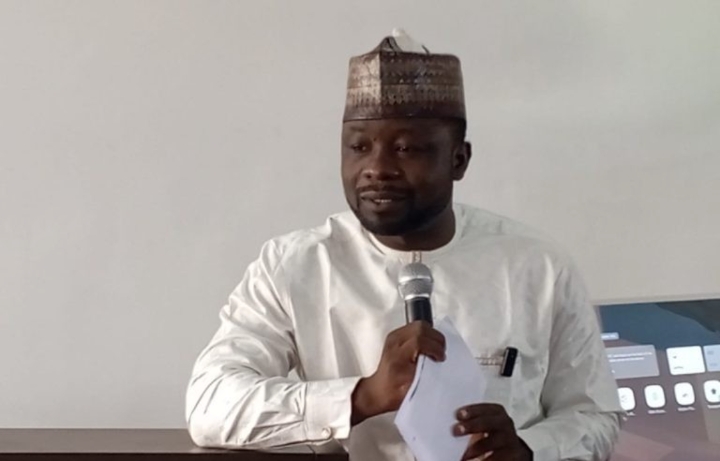
The Kano State Internal Revenue Service (KIRS) on Tuesday commissioned a new Compliance and Enforcement Office as part of efforts to strengthen tax administration and boost internally generated revenue across the state.
Speaking at the inauguration ceremony in Kano, KIRS Executive Chairman, Dr. Zaid Abubakar, said the office marked a major milestone in the ongoing reforms within the agency.
Dr. Abubakar disclosed that the service initially set a revenue target of N35 billion for the year but has now raised expectations for the compliance and enforcement department to deliver as much as N68 billion.
He said the newly commissioned office would provide staff with a conducive working environment to enhance efficiency and productivity.
“This office is a key component of our service. Previously, the compliance and enforcement team operated from a container facility, but today they now have a befitting environment to work effectively,” he said.
The chairman commended Kano State Governor, Abba Kabir Yusuf, for supporting the agency’s reforms and modernization efforts.
“We thank Governor Yusuf for all the political support given to the service. We are also grateful to our technical partners whose contributions have been commendable,” he added.
Dr. Abubakar highlighted a series of infrastructural and technological upgrades by the agency, including the commissioning of the Gyadi-Gyadi Tax Centre and a new call centre to improve taxpayer engagement and service delivery.
He further announced that another tax office in Nassarawa would be commissioned within two weeks to oversee municipal tax operations in the area.
The chairman also noted improvements in operational equipment and digital infrastructure.
He revealed that before the current administration, the agency had only 60 computers, but this number has now increased to over 300.
“We are providing all the necessary equipment for effective service delivery. I urge every staff member to take their responsibilities seriously,” he said.
Dr. Abubakar added that the state government was considering improved welfare packages for revenue service staff, including plans to remove staff remuneration from the mainstream civil service structure and align it with better-performing agencies in states such as Lagos.
“The state governor is committed to improving the welfare package of workers so it can match what is obtainable in states like Lagos,” he said.
Also speaking at the event, Director of Revenue Compliance, Muhammad Abba Aliyu, described the commissioning as a major opportunity for staff. He urged workers to adopt a renewed attitude toward their duties and maximise the benefits of the improved working environment.
“This is a golden opportunity for the compliance and enforcement staff. I urge all members to change their attitude from today and double their efforts,” he said.
A representative of Mannan Professional Services, the agency’s technical partners, expressed appreciation for being part of the initiative and voiced confidence that the compliance team would utilise the facility effectively.
In his remarks, Kano State Commissioner of Finance, Dr. Aliyu Danmaraya, represented by Permanent Secretary Amina Yusuf Yargaya, commended the revenue service for its efforts to improve tax compliance and promote state development.
He noted that effective revenue generation remains a key strategy for sustainable economic growth and infrastructure development in Kano State.
About The Author
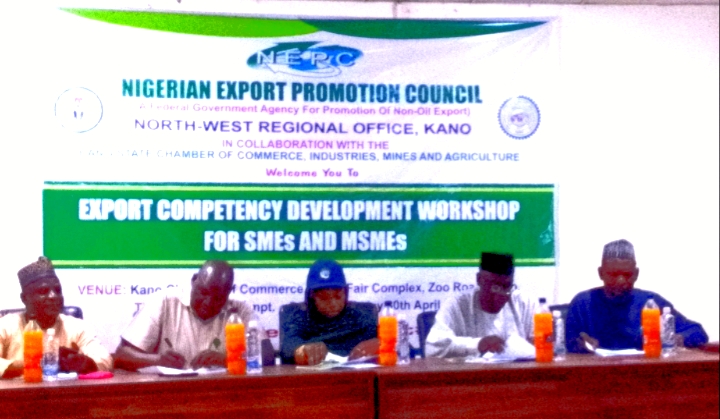
The Nigeria Export Promotion Council (NEPC) says it is committed to building the capacity of Small and Medium Enterprises (SMEs) and Micro, Small and Medium Enterprises (MSMEs) to make them export-ready.
Hajiya Amina Abdulmalik, North West Regional Coordinator NEPC, stated this on Thursday in Kano at the Export Competency Development Workshop for SMEs and MSMEs.
She said the workshop was designed to prepare exporters with the knowledge and skills required to take their produce beyond the shores of Nigeria.
“The essence of organizing this workshop is to prepare our exporters, build their capacity, and make them ready to export. By the end of this workshop, I want to see more than half of the participants export-ready,” Abdulmalik said.
She explained that once exporters are able to formally export their products, Nigeria’s trade volume would increase, thereby contributing positively to the nation’s Gross Domestic Product (GDP).
According to her, support for exporters depends on the type of product being exported, stressing that working in clusters makes retention and assistance easier.
“A common center, perhaps with machinery, can help them process their products. It is not feasible to provide individual support, except through the Export Expansion Grant (EEG),” she said.
She added that exporters must formally export their products, repatriate proceeds, and maintain proper accounts to benefit from the EEG, which serves as a financial incentive.
Abdulmalik noted that NEPC had also provided certificates such as the Mandatory Development Certificate (MDE) and the Hazard Analysis and Critical Control Point (HACCP) certificate to participants, especially women.
“These certificates are essential for exporting to Europe and the United States. Without them, individuals would face significant costs, but through our support, many have been able to obtain them,” she said.
Earlier, Alhaji Nura Habib, Vice President of KACCIMA, said this at the Export Competency Development Workshop in Kano, describing the programme as an opportunity to reposition enterprises and compete beyond Nigeria’s borders.
He noted that access to markets begins with access to knowledge, stressing that the workshop would provide insights into procedures, standards, documentation and international expectations.
Habib commended the Nigerian Export Promotion Council (NEPC) for its dedication to promoting non-oil exports and pledged KACCIMA’s support in expanding Nigeria’s export base.
Speaking also, the Director-General of KACCIMA, Alhaji Tijani Abdullahi, said the workshop was designed to enlighten entrepreneurs on formal export processes and regulations.
“We organized this workshop to guide them on the procedures and rules required for effective export business,” he said, adding that many agribusiness operators in Kano were now conducting exports properly.
Sarki explained that KACCIMA provides information on goods required for export, registration processes and compliance with rules and regulations, noting that the initiative had already yielded positive results.
About The Author
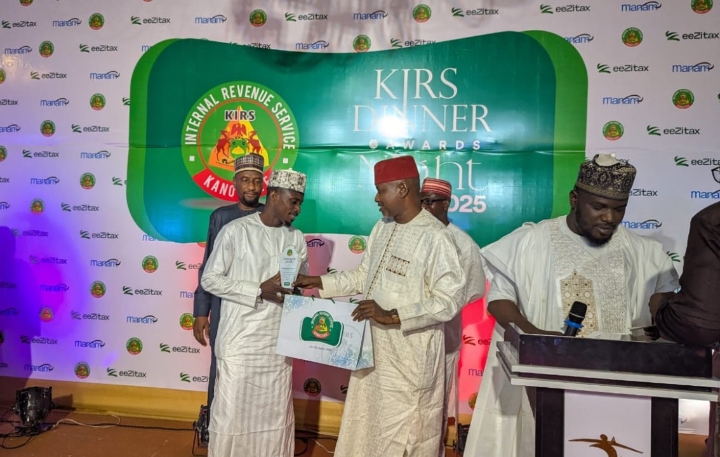
The Executive Chairman, Kano State Internal Revenue Service (KIRS), Dr Zaid Abubakar, says the consolidation of Area Tax Offices from 28 to 12 Revenue Service Centres was a strategic move to improve efficiency and oversight.
Abubakar disclosed this at the KIRS Annual Dinner and Awards Night in Kano, noting that the reform was complemented by the recruitment of over 100 new staff to sustain the Service’s transformation agenda.
He explained that the restructuring was part of broader measures that had boosted Internally Generated Revenue (IGR) from N74 billion in 2024 to N102 billion in 2025.
According to him, the Service had also introduced reforms in motor vehicle administration, including faster turnaround for number plate issuance, improved server uptime and deployment of mobile enforcement equipment.
On future plans, Abubakar announced the introduction of an Annual Development Levy of N2,000, with 50 per cent of collections retained at the community level to support grassroots development.
He added that permanent, state-of-the-art Area Offices would be established across the state to replace rented facilities, while integration with the Nigeria Revenue Service would enhance intelligence and data-driven decision-making.
The chairman said the Service was targeting N200 billion in IGR once full institutional autonomy was achieved, commending staff for their dedication and urging them to remain focused.
Speaking also, the Commissioner for Budget and Planning, Alhaji Musa Shanono, commended KIRS for its outstanding performance, describing the achievements as a testament to the agency’s professionalism in enhancing revenue generation.
Shanono lauded Governor Abba Kabir Yusuf for his proactive development strides, highlighting his administration’s commitment to infrastructural expansion, social welfare programmes and economic empowerment initiatives.
Earlier, the Executive Director, Human Resource Services, Hajiya Fatima Ahmad, congratulated the awardees and expressed confidence that the recognition would inspire them to pursue the ambition of N200 billion in IGR.
The News Agency of Nigeria (NAN) reports that the event also featured award presentations to outstanding staff members in recognition of their exceptional performance.
About The Author

Kano Line Resuscitation Committee Chairman Felicitates Gov. Abba Kabir Yusuf on Third-Year in Office

CS-SUNN Workshop Demonstrates Tools for Evidence-Based Nutrition Planning

KIRS Commissions Compliance Office, Sets N68 Billion Revenue Target

JUST IN: FG Declares Sallah Public Holiday

Rahma Saidu Apologizes to Kano Government, Lauds PCACC’s Work

Refinery: NNPC Ltd Targets Sustained Production with New Maintenance & Compliance Measures
-
General2 years ago
JUST IN: FG Declares Sallah Public Holiday
-
 General1 year ago
Rahma Saidu Apologizes to Kano Government, Lauds PCACC’s Work
-
 Economy2 years ago
Refinery: NNPC Ltd Targets Sustained Production with New Maintenance & Compliance Measures
-

 Agriculture1 year ago
New HJRBDA boss outlines ambitious agenda for agricultural growth, youth empowerment
-

 News2 years ago
Choose dialogue over protest, Kano groups urge youths
-

 Agriculture1 year ago
FG trains laboratory technicians , technologists on soil health card scheme
-

 General2 years ago
ActionAid urges youths to harness digital technologies for development
-
 Entertainment2 years ago
Popular actor, Ali Nuhu appointed as MD Film Corporation