
Education
Chibok girls: UNICEF calls for schools safety in Nigeria


Chibok girls: UNICEF calls for schools safety in Nigeria
By Editor
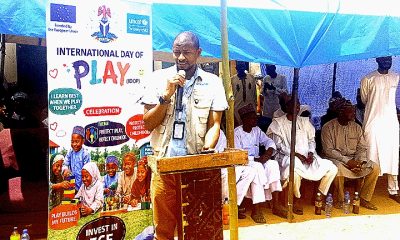
Kano -The United Nations Children’s Fund (UNICEF) has called for concerted efforts to enhance school safety in Nigeria.
The UNICEF Chief of field office Mr.Rahma Rihood Mohammed Farah made the call during the 10th anniversary Commemoration of the Chibok girls held in Kano.
Farah has advocated for unity of purpose by families, communities and the government to protect child education in the face of rising insecurity around schools.
Represented by the Senior education manager UNICEF Kano field office,Mr Michael Banda, lamented the negative impacts of incidents of abduction and kidnapping of school children regretting the rising statistics of out-of-school children due to incessant cases of abduction.
He stressed the need for concerted efforts towards the fight against climate change, as part of endeavours to stop school abduction and ensure security in our schools across the country.
The chief of field office explained that the spate of insecurity will reduce drastically if Nigerian government puts more efforts in making its teeming population productive, just like China and India did.
Also speaking, Commissioner for Higher, Technical and Vocational Education in Katsina state, Prof Abdulhamid Ahmed, attributed the increasing insecurity to porous borders but assured that government has taken adequate measures to ensure the safety of school children.
He said Gov. Dikko Radda recruited thousands of youths across communities in the state to help fight against banditry, kidnapping and other forms of insecurity in Katsina state.
In a remark, his counterpart from Jigawa state, Dr. Isa Yusuf also said that Jigawa has remained safe for school children due to efforts put in place by Governor Umar Namadi to secure lives and property in the state.
He stressed that the Safe School initiative launched by the Federal Government is also helping tremendously to ensure security of school children in the state.
Some of the students who spoke at the event, called on the Federal Government to put more efforts towards the rescue of remaining Chibok girls and also tackle the insecurity bedeviling the country.
About The Author






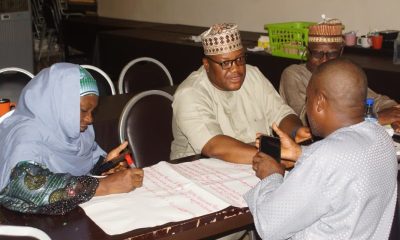




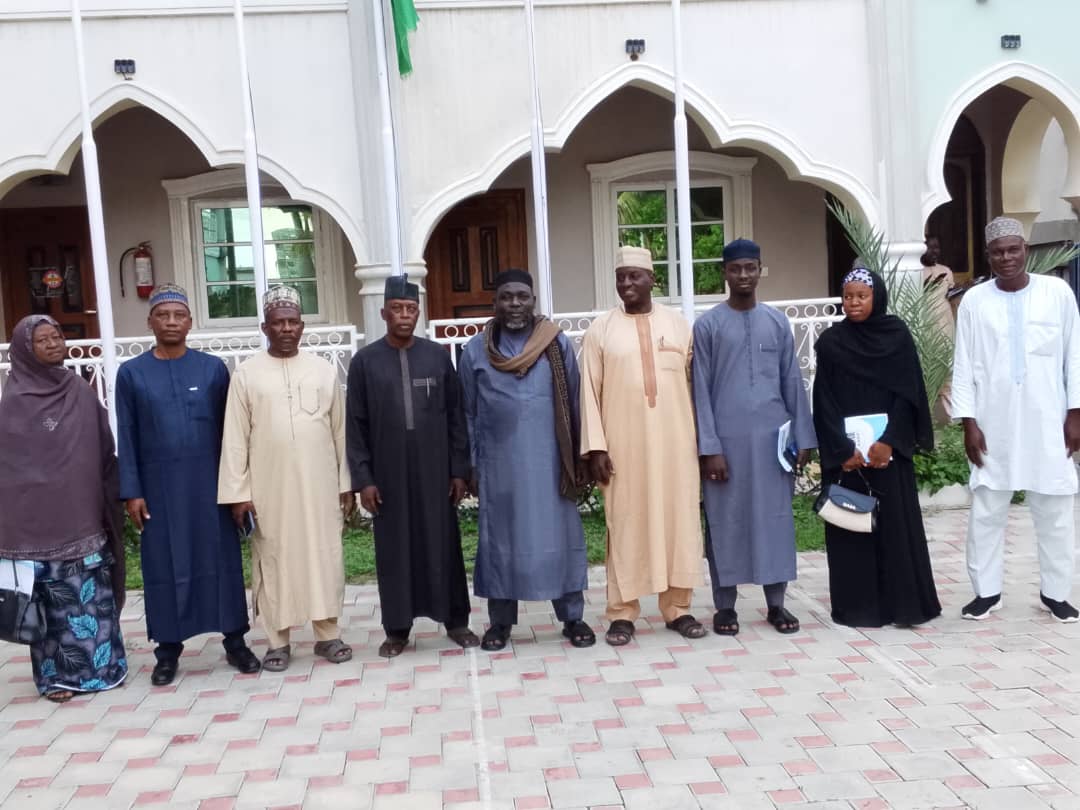
National Association of Proprietors of Private Colleges of Education, NAPPCOE, Kano state chapter has elected interim executive members to run the affairs of outfit for the next two years.
A statement signed by the association’s Head of Media, Ado Salisu, said that the election was conducted during its inaugural meeting held in the state capital.
Ado Salisu further said Alhaji Sani Yusuf Jogana was elected opposed while Hajia Hauwa’u Sani, and Professor Abubakar Abdullahi Bichi, were elected as Vice chairman and secretary respectively.
The statement added that the rest are Hajia Bilkisu Abdullahi Turaki, treasurer, Barrister Yusuf Abdullahi, legal adviser, Bilal Aliyu Musa, public relations officer and Ado Salisu is to head the association’s media.
Speaking shortly after the election, the newly elected chairman, Alhaji Sani Yusuf Jogana said with the formation of the association all hands must be on deck to ensure the success and development of education in the state and country at large.
Jogana charged all members to give their maximum support and cooperation especially in partnering with Kano state government under the leadership of Governor Abba Kabir Yusuf aimed at moving the educational sector forward.
He said that the state has a huge gap to cover in education due to higher demands, so the private institutions should continue to work hand in hand with the present administration with a view to close this gap for the overall development of education statewide.
Earlier in his welcome remarks, the proprietor of Almustapha College of Education, Professor Abubakar Abdullahi Bichi called on the private college owners to contribute their quota towards the upliftment of education across the state and country in general.
In his address, the proprietor of Dala College of Education, Alhaji Aliyu Musa stressed the importance of the association which he described as a backbone of any development in the society.
He highlighted some of the benefits and achievements required can be derived through collective responsibility as government alone cannot shoulder all the responsibilities of developing education across the state.
About The Author
Governor Yusuf reaffirms commitment to educational development
…Applauds KHAIRUN for honouring BUK VC, Prof. Musa
By Ado Salisu
Governor Abba Kabir Yusuf has reaffirmed his administration commitment to close gaps in educational provision, not only as a matter of policy but as a moral imperative to empower the youth and build a prosperous future for Kano state.
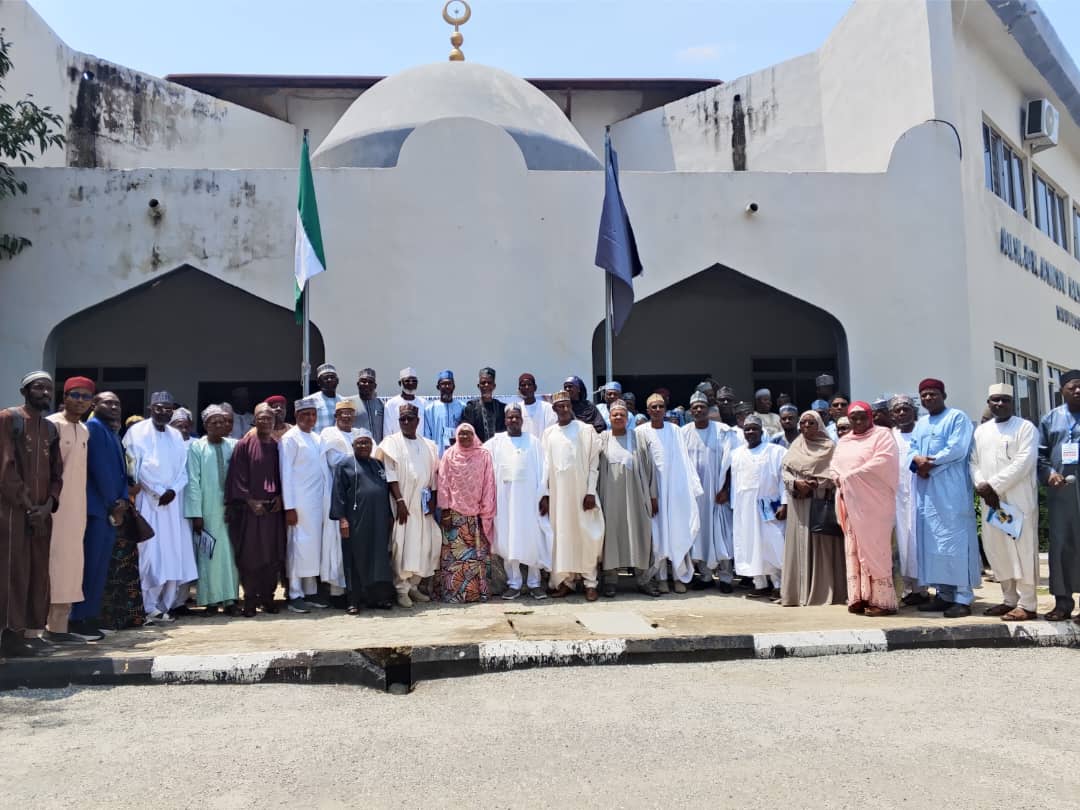
He stated this at the opening ceremony of the colloquium and conference organized by Khalifa Isyaku Rabiu University KHAIRUN in honour of Professor Haruna Musa fsi, the 12th Vice Chancellor of Bayero University Kano BUK held at KHAIRUN premises.
Governor Yusuf who was represented by the state head of service, Hajia Bilkisu Shehu Maimota described the colloquium as well deserved considering his track record academically and administratively in the education sector.
” l extend my profound appreciation to the management and governing council of Khalifa Isiyaka Rabi’u University (KHAIRUN) for this kind invitation and for organizing this colloquium and conference to honour a truly distinguished academic and administrator.
”it is the firm belief of this government that a robust and accessible education system is the cornerstone of socio-economic development. This is why the government is dedicated to maintaining a sustained partnership and collaboration with all stakeholders, including our private institutions like KHAIRUN among others,” he explained.
He applauded the management of KHAIRUN for its commitment to providing quality education and for its recent achievement in upgrading 32 state-of-the-art laboratories to equip students with practical skills, adding that these are the kind of synergy between government vision and institutional drive that will fuel the necessary human capital development for sustainable progress.
” However, honouring a man whose life has been dedicated to the advancement of higher education and national development. Professor Haruna Musa, fsi, whose contributions to academia and transformative leadership as the Vice Chancellor of Bayero University, Kano, are truly commendable.”
“As this colloquium proceeds, I urge all participants to engage in robust and meaningful discourse on issues of significance to education, leadership, and societal development, as reflected in the book being presented today by Dr. Naja’atu Baia Rabi’u. Let us continue to work together in the spirit of partnership, as articulated by the present administration, to build a state and a nation that we can all be proud of,” he said.
Earlier in his opening remarks, the Vice Chancellor of KHAIRUN, Professor Abdulrashid Garba said the colloquium with the theme ” Transformative Science and Technology Education for sustainable Development” is organized in honor of m Professor Musa and is specifically designed to commemorate his first year in office as the 12th substantive Vice Chancellor of the University.
Professor Garba also spoke on the contributions of Professor Musa not to BUK in particular but also to Kano, Katsina and Jigawa but also in the entire region and the Nigeria at large.
”As a matter of tradition, every major occasion taking place in a University is, essentially, an academic occasion. It is for this reason that the colloquium is preceded by a conference at which experts, scholars, researchers and students have the opportunity to present the outcome of their research, deliberate on transformative science and technology education, and examine its contributions to sustainable development,” he explained.
”Today’s opening ceremony will feature, among other activities, the conferment of honours and awards on Bayero University, Kano and its Vice Chancellor as well as the presentation of a book. It is particularly noteworthy that the idea for this book was conceived at BUK and brought to fruition here at KHAIRUN -a clear demonstration of a daughter institution following in the footstep if her mother and mentor.”
”The colloquium seeks to address emerging theoretical and practical advances in, and transformations of, sustainable development, with particular reference to science and technology education. Transformative science and technology education is regarded as a catalyst for personal, societal and environmental transformation.
Universities have a critical role to play in this regards by producing informed and responsible citizens and generating research and policy solutions to contemporary challenges,” he said.
In his remarks, the Vice Chancellor of Bayero University Kano BUK, Prof Haruna Musa expressed gratitude to KHAIRUN for the gesture, adding ” l accept it not as a personal tribute, but on behalf of the staff, students and alumni of Bayero University Kano and indeed on behalf of every colleague across our University system who continues to teach , research and supervise under conditions that would discourage lesser men and women.
Prof Musa charged the conference participants to come out with fruitful deliberations and communique in order to actualise the set objectives.
In his keynote address, Chief Anibe Achimugu of the National Cotton Association of Nigeria, described technology education as a key role in boosting socio economic growth of country.
Highlights of the event include presentation of papers by Professor Abdallah Uba Adamu and Alhaji Abba Danguguwa.
In his vote of thanks, the chairman, organizing committee, Alhaji Nazir Muhammad who double as KHAIRUN’S Chief Liberian thanked all those who have contributed in one way or the other towards a colourful opening ceremony, calling for more support during conference proper.
Dignitaries who graced occasion former former and current vice Chancellors from public and private universities within and outside Kano.
About The Author
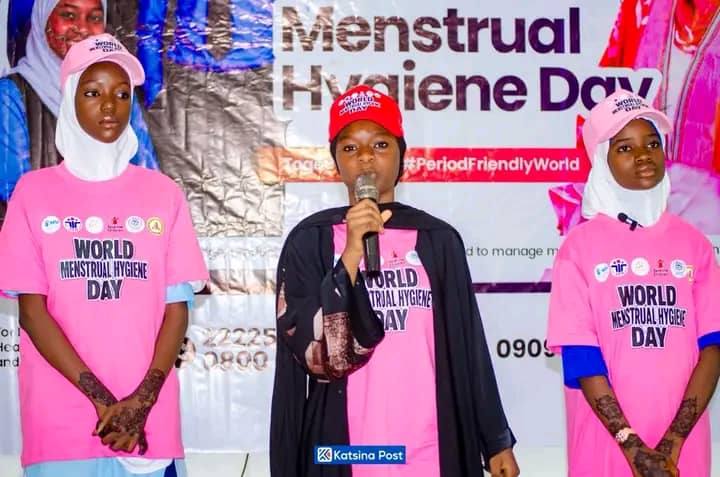
Children in Katsina State have appealed to the state government to provide schools with clean toilets, adequate water supply and affordable sanitary pads to improve menstrual hygiene and girls’ education.
The appeal was made on Saturday during the commemoration of the 2026 World Menstrual Hygiene Day in Katsina, organised by Save the Children with the theme, “Together for a Period-Friendly World.”
Speaking on behalf of adolescent girls, Save the Children Girl Champion, Hafsat Abubakar-Maina, said many girls continued to face difficulties managing menstruation due to poor sanitation facilities and limited awareness.
She described menstruation as a natural biological process that should never be associated with fear, shame or stigma.
According to her, many girls begin menstruation without adequate knowledge, while harmful cultural beliefs and misinformation continue to expose them to discrimination and embarrassment.
Abubakar-Maina said the situation was worsened by the lack of functional toilets, clean water, soap and private changing spaces in many schools across the state.
She said that some girls stayed away from school during their menstrual periods because they could not afford sanitary pads or feared being ridiculed if their uniforms became stained.
According to her, this has a negative impact on girls’ education, self-confidence and future opportunities.
She further commended Save the Children and the Cuppy Foundation for equipping adolescents with knowledge on puberty, menstrual hygiene, personal health and life skills through Adolescent Sexual and Reproductive Health sessions.
Abubakar-Maina said the programme had also helped boys better understand menstruation, fostering respect for girls and reducing stigma in schools and communities.
She also appreciated the organisations for creating safe spaces where young people could openly discuss sensitive health issues and receive accurate information on their health and wellbeing.
Abubakar-Maina further commended the wife of the Katsina State Governor, Hajiya Zulaihat Radda, for supporting initiatives aimed at promoting girls’ education and wellbeing.
Appealing to the government to make sanitary pads affordable or free for girls from low-income families, she urged development partners to sustain menstrual hygiene education across the state.
The children also called on parents, teachers, traditional and religious leaders to break the silence surrounding menstruation, challenge harmful myths and provide girls with the support they need.
“A girl’s period should never stop her from learning, playing or chasing her dreams,” Abubakar-Maina said.
In her remarks, the wife of the governor, Hajiya Zulaihat Radda, reaffirmed the Katsina State Government’s commitment to improving the health, education and welfare of women and girls.
She described menstrual health as a public health, education, human rights and development issue that required the collective efforts of government, communities and development partners.
Radda said the government would continue to strengthen adolescent health interventions, expand access to reproductive health information and services, and improve menstrual hygiene management across the state.
She emphasised that no girl should miss school because of menstruation or suffer discrimination over a natural biological process.
The governor’s wife urged parents, teachers, healthcare providers, traditional and religious leaders to promote accurate information about menstruation and help eliminate stigma in communities.
She also acknowledged the support of the Katsina State Ministry of Health, the State Primary Health Care Agency, Save the Children and other development partners for advancing menstrual health awareness and adolescent health programmes in the state.
Radda called on all stakeholders to renew their commitment to ensuring that every girl has access to menstrual hygiene products, clean water and adequate sanitation facilities..
She also emphasised the need for comprehensive health education and an environment where menstruation should be discussed openly, respectfully and with dignity.
NAN
About The Author

KIRS seeks wider tax compliance to boost Kano revenue

Kano, IBP sign MoU on health financing transparency dashboard

FEPSGA Games: Kano Sports Commission boss to inspect facilities

JUST IN: FG Declares Sallah Public Holiday

Rahma Saidu Apologizes to Kano Government, Lauds PCACC’s Work

Refinery: NNPC Ltd Targets Sustained Production with New Maintenance & Compliance Measures
-
General3 years ago
JUST IN: FG Declares Sallah Public Holiday
-
 General1 year ago
Rahma Saidu Apologizes to Kano Government, Lauds PCACC’s Work
-
 Economy2 years ago
Refinery: NNPC Ltd Targets Sustained Production with New Maintenance & Compliance Measures
-

 Agriculture2 years ago
New HJRBDA boss outlines ambitious agenda for agricultural growth, youth empowerment
-

 News2 years ago
Choose dialogue over protest, Kano groups urge youths
-

 Agriculture2 years ago
FG trains laboratory technicians , technologists on soil health card scheme
-

 General2 years ago
ActionAid urges youths to harness digital technologies for development
-
 Entertainment3 years ago
Popular actor, Ali Nuhu appointed as MD Film Corporation