
Agriculture
Rice Mills Close Shop Over Paddy Scarcity In Kano


Rice Mills Close Shop Over Paddy Scarcity In Kano
Alhaji Dalhatu Abubakar, the Chairman of the Northern Chamber of Commerce Industry, Mines and Agriculture on Monday raised alarm over the scarcity of raw materials that is currently forcing Miller’s to shut down.
According to Food and Agriculture Organisation of the United Nations (FAO), Nigeria is presently the largest producer of rice in Africa, producing about 8,435,000 tonnes annually, followed by Egypt, Madagascar, Tanzania and Mali.
Dalhatu Abubakar who is also the Chairman, Al-Hamsad Integrated Rice Mill told Reporters in his office that the implication of paddy scarcity would forced increase in the price of finish rice, which would further mitigate activities of smugglers.
The soft spoken Industrialist expressed fear that food insecurity may hit its worst level in Nigeria if the present scarcity of paddy, a major raw material for the production of finish rice persist.
Abubakar stressed that several millers have cutdown production from 24 to 12 hours while laying off factory workers who are, by no means, rendered redundant.
He therefore called on the Federal government intervention on the area of mechanization and assisting the farmers with needed input that would enable all year round production.
According to him, “Today hundreds of millers both the integrated and small scale are in serious dilemma and finding it extremely difficult to break even. It is difficult to sustain production now because of scarcity of paddy. As I speak, I know many millers that have completely closed their factories.
He disclosed that “those that are yet to close because they still have limited paddy in their reserve cannot operation 24 hours. Like me, I have reduced my production to 12 house because I don’t have paddy. By implication, several workers will be rendered jobless.”
Dalhatu Abubakar revealed that “Where ever you see paddy now, you buy it at exorbitant prize and you will still be compelled to face high cost of Fuel, pay tax, electricity bill. How many factory would survive this hard economy. The only hard way now is, the cost of finish rice which Nigerians will soon face,” Abubakar noted.
He stressed that “Besides the dearth of the raw material, larger percentage of integrated Rice millers in Kano are presently sourcing paddy at exorbitant prize now at N400,000 per tone, the same quantity previously sold for N330,000 in June, 2023, in other to meet the high market demand.”
Alhaji Abubakar explained “that alone may lead to increase in the cost of local finish product and if allowed unattended, will give raised to demand for foreign rice thereby cripple the relative success the Federal government has recorded in local rice security in the last eight years.
About The Author












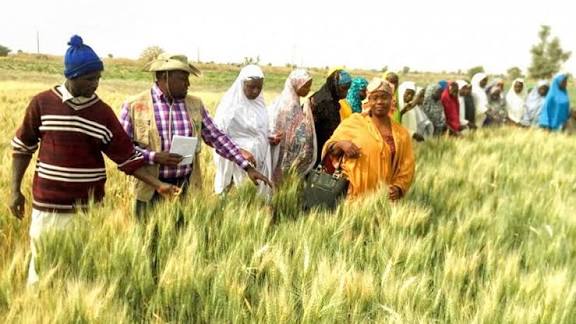
A farmers’ support organisation, Himma Agricultural Support Initiatives (HASI), has trained about 10,000 farmers across Katsina State on improved farming techniques aimed at enhancing agricultural productivity and strengthening food security.
The President of the organisation, Prof. Sanusi Jari, disclosed this during a stakeholders’ engagement tagged ‘Knowledge Dissemination Meeting’ held in Katsina on Saturday.
He said the training focused on equipping smallholder farmers with Good Agronomic Practices, covering all stages of crop production from land preparation to harvesting.
According to him, the initiative was designed to bridge the knowledge gap among farmers and ensure increased yields through the adoption of proper farming methods.
“We have trained about 10,000 members on good agronomic practices. These include land preparation, seed selection, planting methods, spacing, and other critical aspects required to grow crops successfully,” Jari said.
He explained that the organisation adopted a “train-the-trainer” approach, where one representative from each ward was trained and tasked with transferring the knowledge to at least 10 other farmers within their communities.
“This method ensures that knowledge spreads faster and reaches more farmers at the grassroots level,” he added.
Jari stated that HASI also works closely with local communities to promote sustainable farming practices, including land restoration techniques such as the construction of zai pits to rehabilitate degraded farmland.
He said communities actively participate by providing labour and identifying degraded lands requiring intervention, thereby ensuring ownership and sustainability of the projects.
The don further explained that the organisation prioritised five major staple crops, maize, guinea corn, millet, and cowpea, based on their importance to the state’s food system and adaptability to local conditions.
He expressed concern that many farmers still plant grains instead of certified seeds, which significantly reduces yield potential.
“Only about 10 per cent of farmers currently use improved seeds. We want to change that by making quality seeds available at the community level so farmers do not have to travel long distances to access them,” he said.
He added that selected farmers were being supported with foundation seeds and trained to produce quality seeds within their localities, ensuring availability of climate-adapted varieties and improving adoption rates.
Jari added that the stakeholders’ engagement was organised to share experiences, review progress, and strengthen collaboration among partners.
He said the initiative was being supported by a United Kingdom-based donor organisation Propcom, an organisation which the state government linked the farmers’ group with.
In his remarks, the Commissioner for Agriculture, Aliyu Lawal-Zakari, represented by Shamsudeen Abdul-aziz, acting Director Planning, Research and Agriculture, commended the group for their initiative.
He further assured them of all the necessary support from the ministry, adding that their initiative geared towards the same direction with the state government agricultural agenda in the state.
NAN
About The Author

Farmers participating in the Special Agro-Industrial Processing Zones (SAPZ) groundnut initiative in Bebeji Local Government Area of Kano State have recorded up to 100 per cent increase in yield, following the adoption of improved seeds and modern farming techniques introduced through the programme.
Our correspondent who attended a field day organised by SAPZ in Bebeji on Thursday reports that the initiative has significantly boosted farmers’ productivity and income levels.
Some of the beneficiaries who spoke with NAN expressed satisfaction with the support received under the SAPZ programme, describing it as “transformative” and a “turning point” for groundnut cultivation in the area.
One of the farmers, Malam Umaru Garba, said he harvested twice the amount of groundnuts compared to the previous farming season.
“Before SAPZ came, I used to get only about 10 bags from my one hectare farm. This year, I got 20 bags. The improved seeds and training on modern planting methods made a big difference,” Garba said.
Another farmer, Hajiya Maryam Dankaka, said the programme had not only improved her yield but also enhanced her financial stability.
“For the first time, I was able to sell enough groundnuts to pay school fees for my children and still have money to reinvest. The programme taught us better planting spacing, pest control, and post-harvest handling,” she said.
Similarly, a young farmer, Aliyu Musa, commended the facilitators and agricultural experts working with SAPZ for their continuous field visits and technical guidance.
“They visit us regularly to monitor progress and advise us. This has really helped us to avoid mistakes and improve our output,” Musa said.
Also speaking, Malam Sani Usman, another beneficiary, appealed to the SAPZ management to provide farmers with groundnut harvesting machines and ensure timely distribution of improved seeds ahead of the next farming season.
“If we can get access to modern harvesters, our work will be faster and cleaner, and we can produce more. We are very grateful for what SAPZ has done so far,” he said.
The SAPZ programme, supported by development partners and the Kano State Government, aims to promote agro-industrial growth by enhancing value chains, improving farmers’ productivity, and supporting the establishment of processing hubs across the state.
Experts at the field day noted that the groundnut initiative in Bebeji has demonstrated the potential of integrated agricultural interventions to transform rural livelihoods and contribute to food security in Nigeria.
About The Author

About The Author

APC stakeholders warn against factional politics in Adamawa

Tinubu campaign group donates N11m, rice to Katsina APC Officials

Radda unveils ₦10.3m Ramadan support for APC members in Katsina

JUST IN: FG Declares Sallah Public Holiday

Rahma Saidu Apologizes to Kano Government, Lauds PCACC’s Work

Refinery: NNPC Ltd Targets Sustained Production with New Maintenance & Compliance Measures
-
General2 years ago
JUST IN: FG Declares Sallah Public Holiday
-
 General11 months ago
Rahma Saidu Apologizes to Kano Government, Lauds PCACC’s Work
-
 Economy2 years ago
Refinery: NNPC Ltd Targets Sustained Production with New Maintenance & Compliance Measures
-

 Agriculture11 months ago
New HJRBDA boss outlines ambitious agenda for agricultural growth, youth empowerment
-

 News2 years ago
Choose dialogue over protest, Kano groups urge youths
-

 Agriculture1 year ago
FG trains laboratory technicians , technologists on soil health card scheme
-

 General2 years ago
ActionAid urges youths to harness digital technologies for development
-
 Entertainment2 years ago
Popular actor, Ali Nuhu appointed as MD Film Corporation