
Education
EU, UNICEF to enroll 1.5m children, youths in Jigawa, Sokoto, Kano


EU, UNICEF to enroll 1.5m children, youths in Jigawa, Sokoto, Kano
By Admin
Kano- The European Union (EU), in collaboration with United Nations Children’s Fund (UNICEF), has pledged to enroll and skill 1.5 million children, youths and adolescents in Jigawa, Sokoto and Kano states.
Michael Banda, Senior Education Manager, UNICEF, Kano Field Office, made the pledge at a multi- sectoral key stakeholders meeting on education and youths empowerment project on Wednesday in Kano.
He said that the programme was aimed at increasing the number of girls and boys benefiting from safe, inclusive, relevant learning and skills development opportunities in Kano, Jigawa and Sokoto states.
Banda said the four-year programme which commenced from October 2023 to August 2027, would cover Kano, Jigawa and Sokoto states.
“The programme operation is categorised into three main outputs involving strengthened education governance and learning, expanded access to safe and inclusive learning environment and giving quality, continuous learning and enhanced competencies.”
The education manager pointed out that in Nigeria, many children between seven and 14 could not read or write simple sentence.
“Our aim is for them to get skill that will make them competitive, marketable and self sustaining, to start a business.
“We are also looking at Integrated Qur’anic School because we have Qur’anic schools that do an integrated curriculum which includes literacy and numeracy beyond the religious education.
“We are going to catch everyone, including those who do not have space in the formal school,” he said.
Banda said that Kano State had been selected to be one of the top beneficiaries of the newly introduced European Union-funded education and empowerment programme in Nigeria.
According to him, Kano will have the lion share of the project because of its population and the number of out-of-school children.
He said that EU was not only concentrating its resources in Kano, but in Northwest, Northeast and other states in Nigeria.
The UNICEF education manager added that the EU was an all-weather partner for UNICEF and various states in ensuring that all children accessed quality education.
Earlier, the Commissioner for Education, Alhaji Umar Doguwa, commended the development partners for the gesture.
He restated the state government’s commitment to invest in education sector.
About The Author

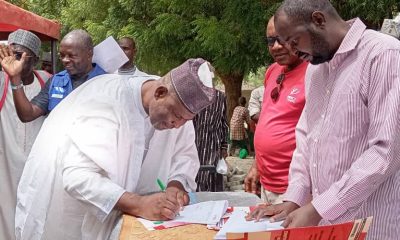

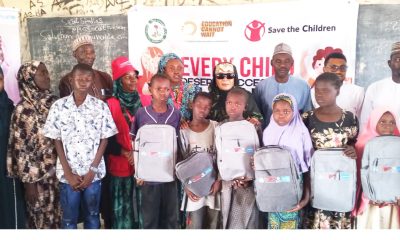


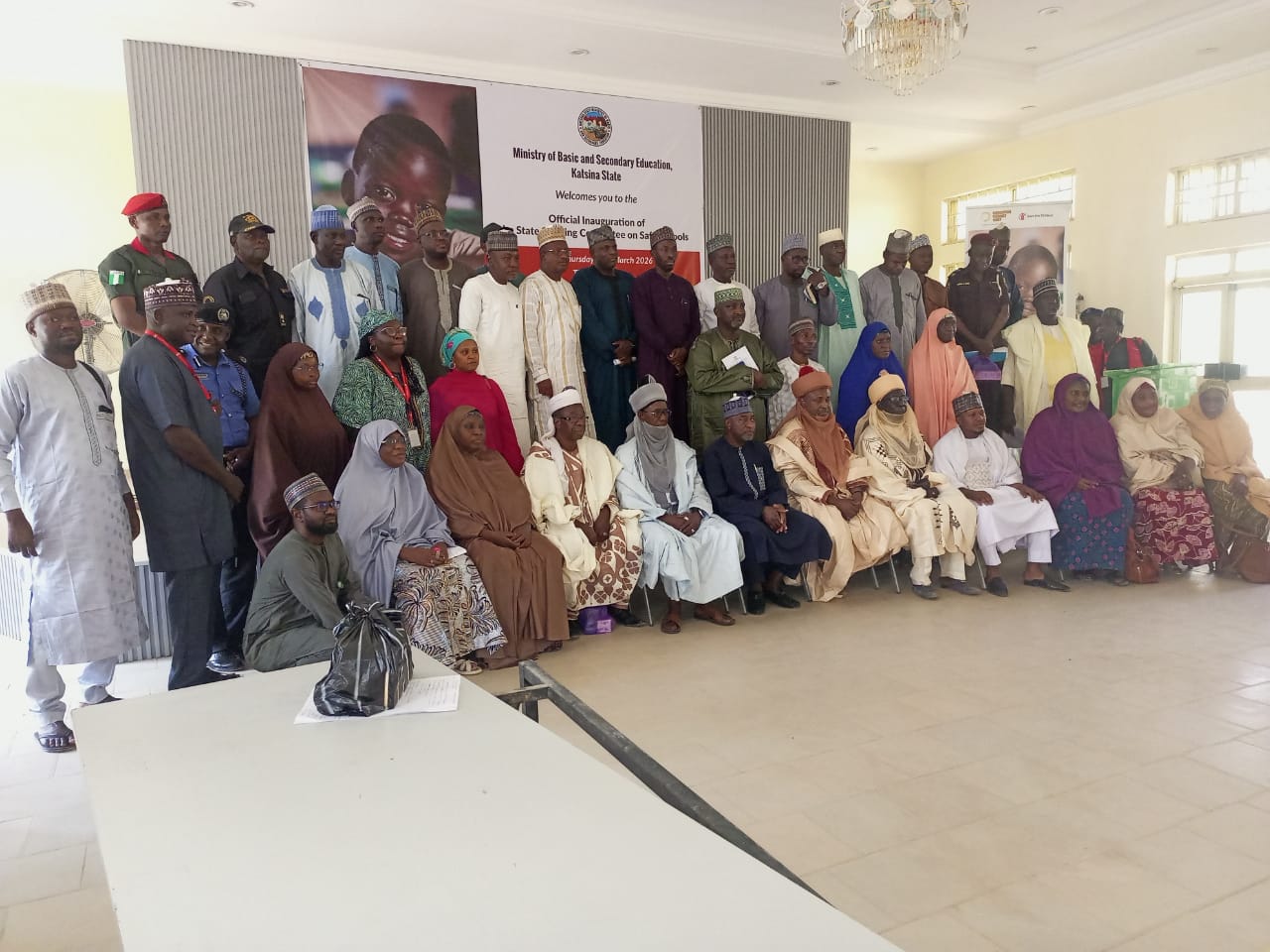
The Katsina State Government has taken a decisive step toward strengthening safety in schools across the state, with the inauguration of a Steering Committee on Safe Schools.
The programme, held on Thursday in Katsina, was supported by the Education Cannot Wait (ECW) project, aimed at domesticating and implementing the National Safe Schools Policy (NSSP).
Speaking at the event, the Commissioner for Basic and Secondary Education, Yusuf Suleiman, described the inauguration as a landmark moment in the state’s efforts to ensure that every child learns in a safe, secure environment free from fear, violence, and other threats.
According to him, the state government recognises that meaningful learning can only take place where safety, dignity, and protection are guaranteed for both students and educators.
He reiterated that education remained a top priority of the administration of Gov. Dikko Radda, noting that the government had continued to invest in policies and programmes aimed at improving the welfare of children and strengthening the education system.
Suleiman pointed out that schools across the state face a range of risks, including insecurity, natural hazards, and other forms of violence, stressing that addressing such challenges requires coordinated efforts among relevant stakeholders.
The commissioner explained that the newly inaugurated committee would provide strategic leadership and coordinate efforts among government ministries, security institutions, civil society organisations, development partners and local communities.
He added that the steering committee would also oversee the domestication and effective implementation of the NSSP in the state.
Suleiman assured that the state government was fully committed to domesticating the policy to ensure the protection of school environment and uninterrupted learning for children across the state.
He also acknowledged the role of development partners, especially Save the Children International (SCI), which implements the ECW project, and UNICEF, in supporting the initiative.
Earlier, the Deputy Director of Programme Influencing at Save the Children, Badar Musa, said the initiative follows Nigeria’s endorsement of the Safe Schools Declaration in 2015.
According to him, the declaration provides a framework and minimum standards for protecting schools nationwide.
Musa explained that states across the federation were encouraged to establish steering committees to domesticate and implement the policy at the state level.
He commended Katsina State for taking the step, describing it as a demonstration of strong commitment to child protection and school safety.
According to Musa, Katsina will become the fifth state in the country to domesticate the NSSP once the process is completed.
He stressed that schools must remain safe spaces for learning and warned against the use of school facilities as operational bases by security forces.
The deputy director noted that such actions could expose students and teachers to risks during attacks.
He further highlighted the role of the National Safe Schools Response Coordination Centre, which monitors threats and coordinates interventions aimed at preventing attacks on schools.
The commissioner said the centre had successfully prevented hundreds of attempted attacks on schools across the country between February 2023 and December 2025.
NAN
About The Author
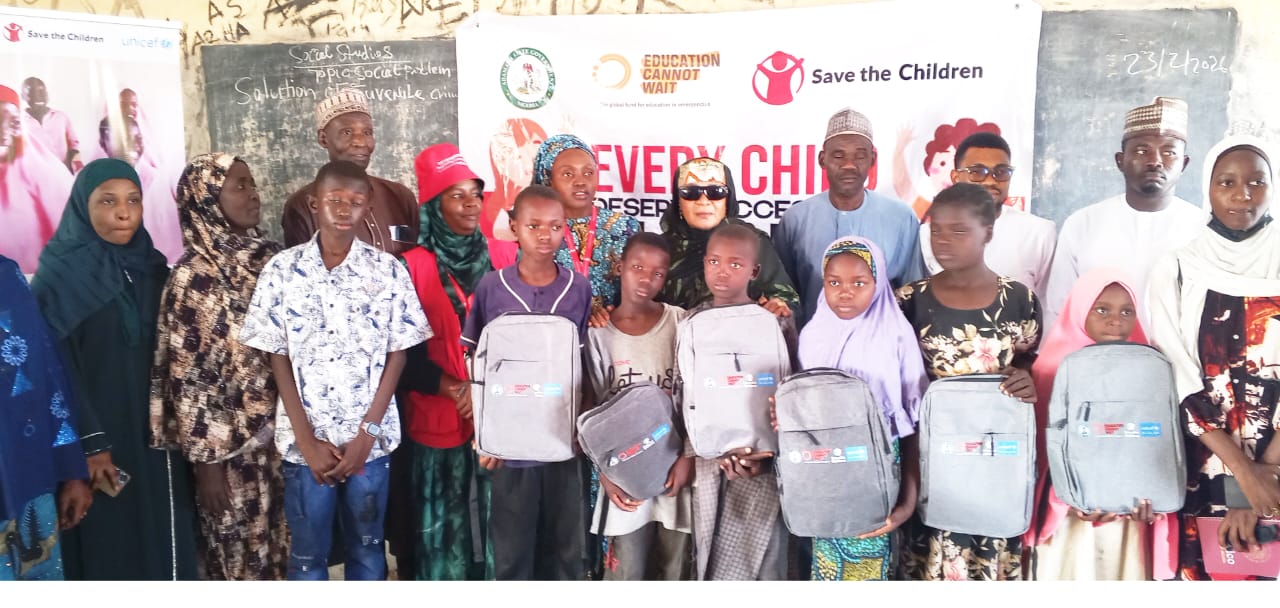
Save the Children International (SCI) has launched the distribution of learning materials to 1,052 vulnerable out-of-school children in nine communities in Yola-South Local Government Area of Adamawa.
Speaking at the event on Tuesday, SCI Education Officer, Maryam Neol, said the intervention was implemented under the Education Cannot Wait (ECW) project.
She explained that the initiative aimed to accelerate access to inclusive and quality education while building a resilient and sustainable learning system for children excluded from formal schooling.
According to her, beneficiaries will undergo a nine-month accelerated learning programme before being integrated into formal schools, while some will receive skills acquisition training.
“The programme is structured to equip the children with foundational literacy and numeracy skills required for a smooth transition into conventional classrooms,” she said.
Neol listed benefiting communities as Yelwa, Wuro-Cheki, Namtari, Damare, TC Demonstration, Wuro-Jabbe, Walowol Gugu, Wuroyanka and Ngurore Central.
The Commissioner for Education and Human Capital Development, Garba Pella, commended SCI for supporting efforts to reduce the number of out-of-school children in the state.
Represented by Director Alhaji Bappa Mohammed, Pella said the intervention aligned with government’s commitment to expanding access to basic education.
He urged parents and community leaders to support the accelerated learning programme, emphasizing that they should ensure beneficiaries take full advantage of the opportunity to secure a better future.
Also speaking, Mr Stephen Medugu, Coordinator of the Education in Emergency Working Group, lauded SCI’s intervention and encouraged parents to prioritise their children’s education.
A community leader in Samunaka, Malam Shuaibu Ali, appreciated SCI and its partners but expressed concern over insecurity affecting schools in the area.
Ali said incidents of harassment involving students and teachers had been recorded, and appealed to the state government to strengthen security to create a safer learning environment.
About The Author

Federal Government says it will provide starter packs to graduates of Technical and Vocational Education and Training (TVET) programmes as part of efforts to promote skills development and enhance youth employability.
The Minister of State for Education, Prof. Suwaiba Ahmad disclosed this on Monday during an inspection visit to Bayero University, Kano (BUK), where she assessed ongoing vocational training initiatives supported by the ministry.
She said the initiative was designed to ensure that beneficiaries of the TVET programme become self-reliant, job creators and active contributors to the nation’s economic growth.
According to her, the provision of starter packs will complement the Federal Government’s drive to reduce unemployment and address the persistent skills gap in the country.
“The administration of President Bola Tinubu is committed to strengthening technical and vocational education because it remains a critical pathway to empowering young Nigerians.
“Providing starter packs will enable our youths to put their training into practical use immediately,” she said.
The Minister also commended President Bola Tinubu for approving the programme, which covers about 25 vocational trades, including carpentry, leather works, tailoring, ICT skills, cosmetology, welding, solar installation and other technical areas.
She urged beneficiaries to take full advantage of the initiative, adding that the programme aligns with the administration’s commitment to reducing youth unemployment, promoting self-sufficiency and driving national development.
Ahmad commended BUK for its commitment to implementing the programme, noting that the ministry would continue to partner institutions that promote innovation, productivity and entrepreneurship.
Also speaking, the Vice Chancellor of the university, Prof. Haruna Musa, said the programme was timely as the country continued to grapple with low employability, reduced productivity and slow economic growth due to inadequate skills among its youth population.
Represented by the Deputy Vice Chancellor (Academic), Prof. Ahmad Tsauni, said the programme was designed to equip young Nigerians with practical and entrepreneurial skills that would enhance job creation, innovation and national development.
Musa encouraged participants to take full advantage of the opportunity by learning diligently and transforming themselves into agents of positive change in their communities.
About The Author

Katsina Statistician General donates N20m to students, Islamic preachers

Ethnic community leaders commend Nigerian Army’s security efforts in Kano

NGO celebrates women as Katsina peace champions

JUST IN: FG Declares Sallah Public Holiday

Rahma Saidu Apologizes to Kano Government, Lauds PCACC’s Work

Refinery: NNPC Ltd Targets Sustained Production with New Maintenance & Compliance Measures
-
General2 years ago
JUST IN: FG Declares Sallah Public Holiday
-
 General11 months ago
Rahma Saidu Apologizes to Kano Government, Lauds PCACC’s Work
-
 Economy2 years ago
Refinery: NNPC Ltd Targets Sustained Production with New Maintenance & Compliance Measures
-

 Agriculture12 months ago
New HJRBDA boss outlines ambitious agenda for agricultural growth, youth empowerment
-

 News2 years ago
Choose dialogue over protest, Kano groups urge youths
-

 Agriculture1 year ago
FG trains laboratory technicians , technologists on soil health card scheme
-

 General2 years ago
ActionAid urges youths to harness digital technologies for development
-
 Entertainment2 years ago
Popular actor, Ali Nuhu appointed as MD Film Corporation