
Agriculture
KSADP TARGETS 1.8 MILLION LIVESTOCK FOR 2023 VACCINATION


By Admin October 3, 2023
Kano State Agro-pastoral Development Project, KSADP, is to vaccinate at least One million cattle and 800,000 goats and sheep in this year’s annual livestock vaccination campaign, in Kano state.
Funded by the Islamic Development Bank and the Lives and Livelihood Funds, the project intends to spend not less than N160 million on the campaign, which aims to enhance livestock health and improve livelihoods of herders and livestock breeders.
The State Project Coordinator, KSADP, Malam Ibrahim Garba Muhammad, disclosed this during the kick-off of community sensitization on the exercise, held that the palace of the district Head of Kura, in Kura local government area of the state.
“The project is determined to upscale the vaccination because livestock health is tied to your livelihoods, and by extension our economy”, the Coordinator stressed.
“The objective of this interaction is to enhance your understanding of the vaccination and to seek cooperation of all stakeholders so that the exercise succeeds”, he added.
Besides the annual vaccination campaign, Malam Ibrahim said the project had embarked upon several projects including the upgrade and equipping of Kadawa Artificial Insemination Center, construction of milk collection centers, upgrade of cattle markets and crop residue utilization program, among others, to improve the livelihood of the herders.
“We shall soon award contract for demarcation of stock routes in Kano, which is major step towards ending conflict between farmers and herders in Kano”, he further revealed.
The District Head of Kura, Dokajin Rano, represented by Alhaji Balarabe Muhammad disclosed that no outbreak of livestock diseases has been reported in the area in the past three years due to consistent vaccination carried out by the KSADP.
He therefore directed village heads and herders’ community leaders in the domain to fully mobilize for the forthcoming vaccination in view of its importance.
In his comments on behalf of herders’ communities in Kura local government, Malam Zubairu Muhammad said they are familiar with livestock vaccination, having benefitted in the past three years, assuring that there will be no resistance to the exercise.
“We have seen the impact of the vaccination conducted in the past, so we appreciate the Islamic Development Bank and the LLF for their untiring support”, he asserted.
Also speaking, the Zonal Veterinary Director for Rano Zone, Dr. Idris Ibrahim, who underscored the importance of the livestock vaccination, suggested that livestock vaccination campaign should include Rabies vaccination, since the herders also possess livestock guardian dogs.
About The Author


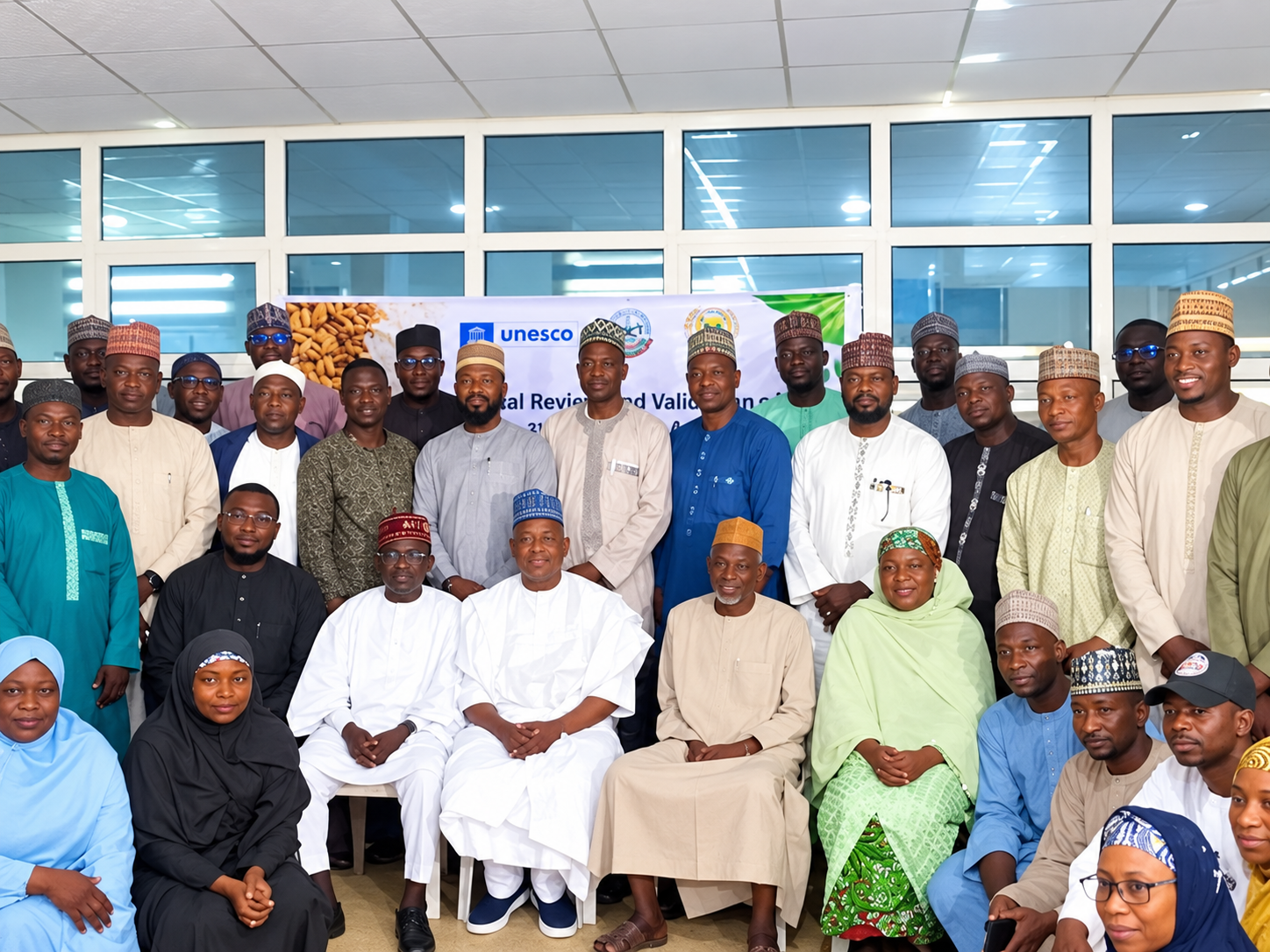
The Audu Bako College of Agriculture, Dambatta (ABCOAD), and the United Nations Educational, Scientific and Cultural Organisation (UNESCO) have partnered to strengthen competency-based training in rice processing and bridge the skills gap among Nigerian graduates.
The partnership is being implemented under the Better Education for Africa’s Rise (BEAR II) project, which seeks to strengthen Technical and Vocational Education and Training (TVET), particularly in agriculture and agro-processing.
The initiative features a three-day capacity-building workshop for master trainers on competency-based training in rice processing, scheduled for Oct. 21 to Oct. 23 at Alhamsad Rice Mill, Kano.
Speaking at the workshop, the Provost of ABCOAD, Dr Hassan Ibrahim, called for stronger collaboration between educational institutions and industry partners to equip graduates with practical skills required by employers.
Ibrahim said many graduates left educational institutions without the practical competencies needed in the workplace, stressing the need to align training programmes with industry requirements.
He said the partnership would strengthen vocational education and improve graduates’ employability by ensuring that students acquired relevant, industry-oriented skills.
The provost commended UNESCO and industry partners for supporting skills development and youth employment.
He said the college was committed to sustaining the initiative beyond the project period through stronger partnerships with industry stakeholders.
Ibrahim added that such collaboration would enable industry requirements to inform curriculum development and training delivery.
He urged participants and other stakeholders to contribute to achieving the objectives of the programme, expressing optimism that the workshop would improve the quality of vocational training in rice processing.
Declaring the workshop open, the Executive Secretary of the Kano State Science and Technical Schools Board, Prof. Dahiru Saleh, reaffirmed the state’s commitment to strengthening technical and agricultural education through modern equipment and skills development programmes.
Saleh said the initiative would promote practical skills by integrating technical education with agricultural practices and industry requirements.
He said the participation of the National Board for Technical Education (NBTE), ABCOAD, industry partners and UNESCO demonstrated a collaborative approach to improving vocational training.
According to him, stakeholders participated in developing the training manual, which would undergo scrutiny by the NBTE for certification under the National Skills Qualification (NSQ) framework.
He said the certification process would ensure that the training materials met the required standards for competency-based skills development.
Saleh commended the Kano State Government for providing modern agricultural equipment to support practical training in educational institutions.
He listed a combine harvester, tractor and planter among the equipment provided to Government Technical College to enhance hands-on learning and equip students with skills relevant to modern agriculture and agro-processing.
Earlier, the Executive Secretary of NBTE, Prof. Idris Bugaje, called on experts and stakeholders to contribute to the review and validation of the training manual developed to strengthen competency-based training in rice processing.
Bugaje, represented by Rukayya Rabiu, said the manual was designed to translate National Occupational Standards (NOS) into practical learning materials for trainers and trainees.
He said the standards covered rice processing and were intended to support certification under the NSQ framework.
According to him, the standards needed to be developed into comprehensive training manuals to facilitate effective instruction and ensure that learners acquired the required competencies.
He said the draft manual was presented for review and validation by experts and other stakeholders before its adoption for training programmes.
Bugaje urged participants to identify gaps, suggest improvements and make recommendations to enhance the quality of the document.
He expressed optimism that the exercise would produce a comprehensive manual to support effective skills development and facilitate the certification of trainees under the NSQ framework.
About The Author
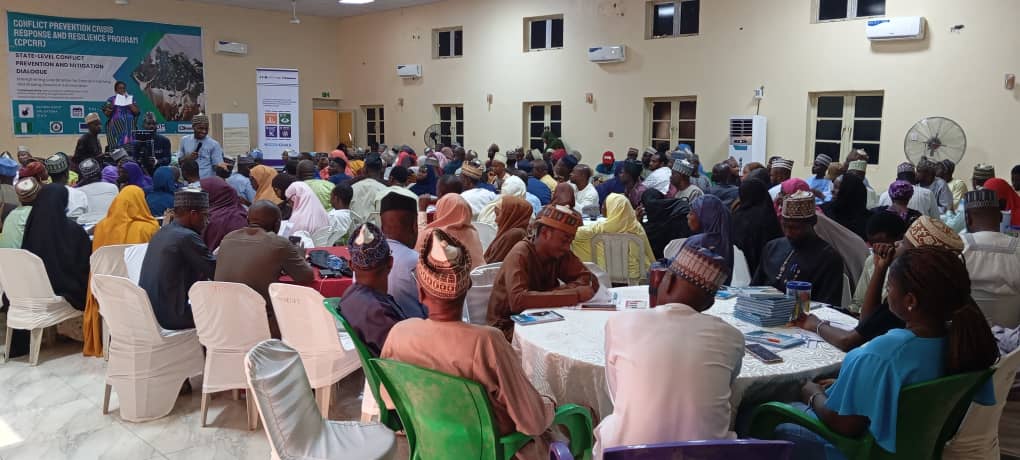
The Conflict Prevention, Crisis Response and Resilience (CPCRR), a project funded by the European Union (EU), has organised a two-day state-level Conflict prevention and mitigation dialogue for 200 participants in Katsina.
The multi-stakeholder engagement aimed at strengthening coordination, promoting peaceful coexistence, and preventing conflict during the 2026 farming season in Katsina.
Speaking at the event, the Commissioner for Livestock Development, Prof. Ahmed Bakori, highlighted the significance of the training designed to equip communities, especially those in frontline areas, with conflict resolution skills and strategies for peaceful coexistence.
He cited successes recorded in communities such as Batsari, Safana, Danmusa, and Kankara, where trained stakeholders have helped in integrating peace agreements and reducing tensions between farmers and pastoralists.
The commissioner however, noted that communities without such training often face challenges in maintaining peace due to lack of awareness and coordination.
He further called on stakeholders to intensify efforts toward promoting community peace to ensure a hitch-free farming season across the state.
The commissioner stressed that peace remained a critical requirement for agricultural productivity and economic growth, noting that farmers and cattle rearers could only thrive in a stable and secure environment.
According to him, community-based peacebuilding initiatives have proven to be effective in tackling conflicts, as they promote local ownership and participation in resolving disputes.
Bakori emphasised the importance of stakeholder engagement, describing traditional and religious leaders as vital in fostering dialogue and mutual understanding among community members.
The commissioner reiterated the commitment of the state government to supporting initiatives that promote peace and stability, particularly in rural communities.
Earlier, Mr Philip Ikita, Programme Manager at Mercy Corps, said the initiative was designed to reinforce peace and socio-economic stability in Northwest Nigeria through inclusive and locally driven approaches.
Ikita explained that the programme was built on the successes of previous interventions, particularly the Conflict Mitigation and Community Reconciliation (CMCR) project, to address the root causes of recurring conflicts in the region.
He noted that the CPCRR Programme currently operates in 48 communities across 10 Local Government Areas in Zamfara and Katsina, focusing on enhancing resilience, strengthening livelihoods and promoting social cohesion.
According to him, the state-level dialogue is a multi-stakeholder engagement aimed at strengthening coordination among government institutions, communities and development partners.
“The objective is to promote peaceful coexistence between farmers and herders, identify potential conflict triggers, and develop practical strategies to mitigate tensions during the farming season,” he said.
Ikita added that the dialogue would also produce a joint action plan to guide conflict prevention efforts across affected communities.
According to him, the event is convened by Mercy Corps in collaboration with the Katsina State Ministry of Agriculture and the Ministry of Livestock Development under the CPCRR Programme.
He said that the CPCRR Programme is being implemented by the International Organization for Migration (IOM) in partnership with Mercy Corps and the Centre for Democracy and Development (CDD).
The News Agency of Nigeria (NAN) reports that the targeted local government areas are Batsari, Danmusa, Jibia, Kankara, Dandume, Faskari, Sabuwa and Safana.
NAN
About The Author
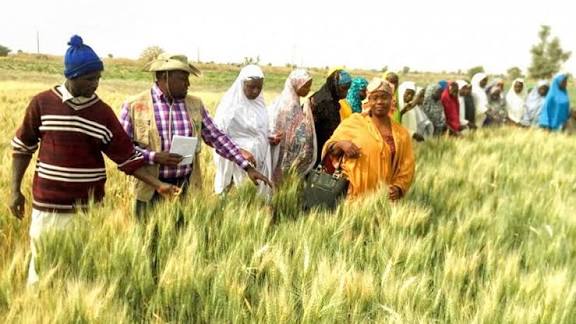
A farmers’ support organisation, Himma Agricultural Support Initiatives (HASI), has trained about 10,000 farmers across Katsina State on improved farming techniques aimed at enhancing agricultural productivity and strengthening food security.
The President of the organisation, Prof. Sanusi Jari, disclosed this during a stakeholders’ engagement tagged ‘Knowledge Dissemination Meeting’ held in Katsina on Saturday.
He said the training focused on equipping smallholder farmers with Good Agronomic Practices, covering all stages of crop production from land preparation to harvesting.
According to him, the initiative was designed to bridge the knowledge gap among farmers and ensure increased yields through the adoption of proper farming methods.
“We have trained about 10,000 members on good agronomic practices. These include land preparation, seed selection, planting methods, spacing, and other critical aspects required to grow crops successfully,” Jari said.
He explained that the organisation adopted a “train-the-trainer” approach, where one representative from each ward was trained and tasked with transferring the knowledge to at least 10 other farmers within their communities.
“This method ensures that knowledge spreads faster and reaches more farmers at the grassroots level,” he added.
Jari stated that HASI also works closely with local communities to promote sustainable farming practices, including land restoration techniques such as the construction of zai pits to rehabilitate degraded farmland.
He said communities actively participate by providing labour and identifying degraded lands requiring intervention, thereby ensuring ownership and sustainability of the projects.
The don further explained that the organisation prioritised five major staple crops, maize, guinea corn, millet, and cowpea, based on their importance to the state’s food system and adaptability to local conditions.
He expressed concern that many farmers still plant grains instead of certified seeds, which significantly reduces yield potential.
“Only about 10 per cent of farmers currently use improved seeds. We want to change that by making quality seeds available at the community level so farmers do not have to travel long distances to access them,” he said.
He added that selected farmers were being supported with foundation seeds and trained to produce quality seeds within their localities, ensuring availability of climate-adapted varieties and improving adoption rates.
Jari added that the stakeholders’ engagement was organised to share experiences, review progress, and strengthen collaboration among partners.
He said the initiative was being supported by a United Kingdom-based donor organisation Propcom, an organisation which the state government linked the farmers’ group with.
In his remarks, the Commissioner for Agriculture, Aliyu Lawal-Zakari, represented by Shamsudeen Abdul-aziz, acting Director Planning, Research and Agriculture, commended the group for their initiative.
He further assured them of all the necessary support from the ministry, adding that their initiative geared towards the same direction with the state government agricultural agenda in the state.
NAN
About The Author

ABCOAD, UNESCO Partner to Boost Technical Skills in Rice Processing

2027: Gov Yusuf assures Tinubu of North support for his re-election

Nigerian Army honours 22 SNCOs after 35 years of meritorious service

JUST IN: FG Declares Sallah Public Holiday

Rahma Saidu Apologizes to Kano Government, Lauds PCACC’s Work

Refinery: NNPC Ltd Targets Sustained Production with New Maintenance & Compliance Measures
-
General3 years ago
JUST IN: FG Declares Sallah Public Holiday
-
 General2 years ago
Rahma Saidu Apologizes to Kano Government, Lauds PCACC’s Work
-
 Economy2 years ago
Refinery: NNPC Ltd Targets Sustained Production with New Maintenance & Compliance Measures
-

 Agriculture2 years ago
New HJRBDA boss outlines ambitious agenda for agricultural growth, youth empowerment
-

 News2 years ago
Choose dialogue over protest, Kano groups urge youths
-

 Agriculture2 years ago
FG trains laboratory technicians , technologists on soil health card scheme
-

 General2 years ago
ActionAid urges youths to harness digital technologies for development
-
 Entertainment3 years ago
Popular actor, Ali Nuhu appointed as MD Film Corporation